Pages

Sunday, 26 July 2015

Recipe CXXIII - Norwegian Suksessterte

Having recently returned from the northern paradise that is Norway, both brimming with new ideas and aching with nostalgia for the serenity, advanced civilisation and heart-breakingly beautiful scenery, I came across a little gem of a recipe. Norwegians are big on food: lots come out of cans, as only a country half inside the Arctic Circle should, but when it comes to their recipes, the flavours are so different. They could be an acquired taste to some, but once you are used to them, they are a breath of fresh air.

I would like to introduce you to the Suksessterte, or Success Tart, in English. I was invited to the house of a splendid family for coffee (a Norwegian religion) and cake, and this one was there on the table, inviting and succulent-looking, so I cut myself a slice. It was so good, I had to get the recipe. Here is my effort, slightly changed from the one I got there, to reflect the proportions I used, and the ingredients on offer in Germany.


Ingredients:

Cream:
5 egg yolks:
100 ml double cream (I had to use mascarpone and some ordinary cream, because heavy cream/double cream and the like don't exist in Germany)
100 g ordinary sugar
150 g cold butter, sliced into cubes

Almond meringue:
5 egg whites
250 g ground almonds
225 g icing sugar

Topping:
Grated dark chocolate

Instructions for the cream:
Place the egg yolks, cream and sugar (NOT THE BUTTER) in a saucepan, put on a very low heat and stir until all the ingredients have melted into each other and it has become thicker. Use a spatula or a flat whisk to stir it - this should take about 15 to 20 minutes.

The mixture should not be allowed to boil or you will end up with bits of curdled egg in your mixture, and nobody wants to have that.

When it's all blended, take it off the heat, and add the butter piece-by-piece. Then get an electric mixer and whisk it for a good 5 to 10 minutes before placing it in the fridge until you have made the almond meringue.


Instructions for the almond meringue:
Put the oven on 160°C and take a square or round baking tray lined with baking paper.

Firstly, give the almonds a good pounding in the processor, to make the pieces extra small. Add the icing sugar and keep the food processor going until both ingredients have successfully mixed with each other.

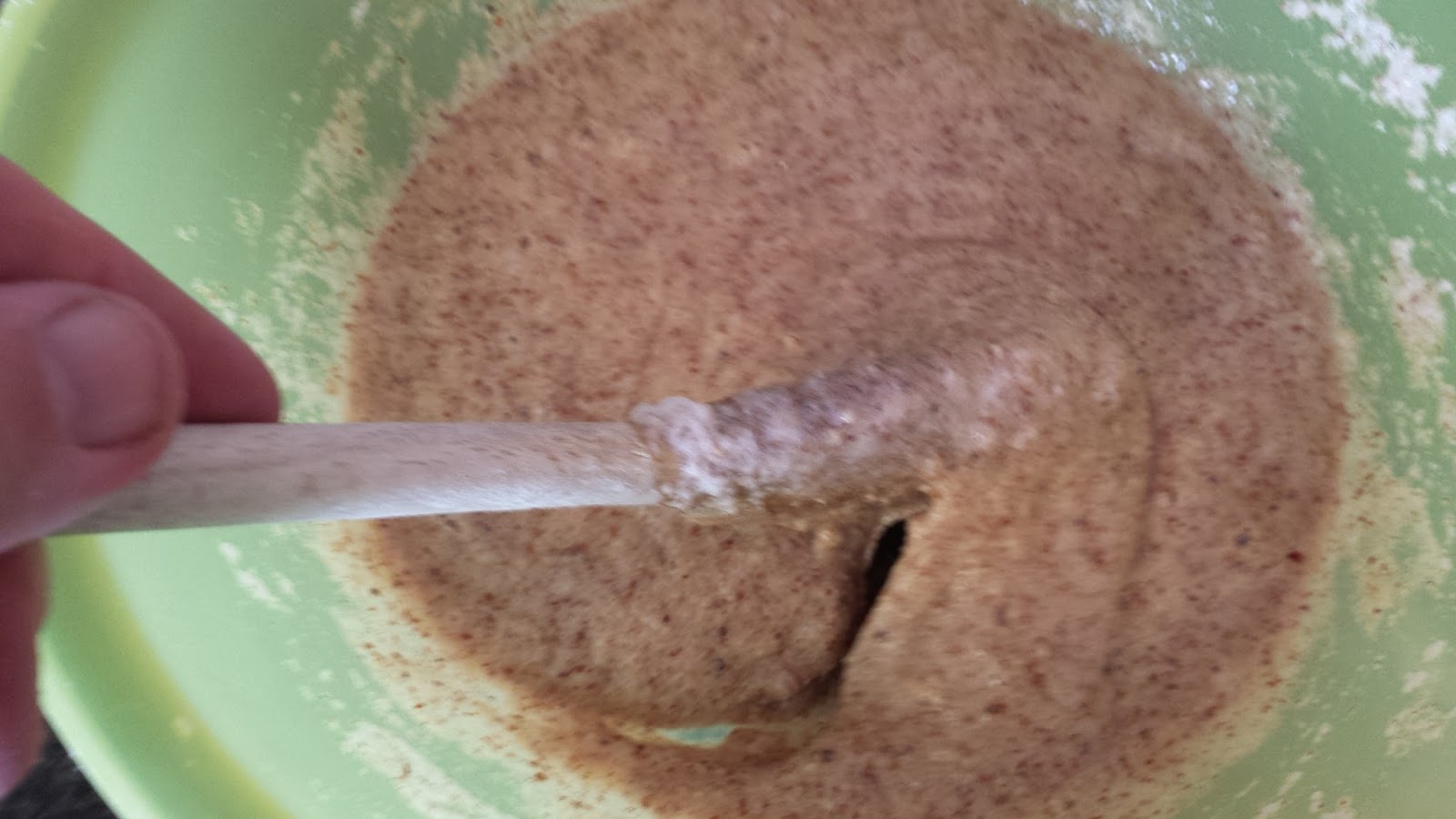
With the egg whites, whisk them until they form the usual stiff peaks and then fold the almond-sugar mix into the egg white. 


Once homogeneous, transfer the mixture to the baking tray and put it in the oven for 30 to 35 minutes. In hindsight, I would not have used the baking paper, and just taken a chance with the baking tray's non-stick bottom. I will try this next time.

Once out of the oven, turn it upside-down onto a cake grid without the paper and let it cool.

Put your cake base on a clean cake tray, get the topping out of the fridge and start icing the cake with a spatula. Once you have covered it with the topping, grate chocolate on top.

Serve with copious amounts of coffee and invite your favourite visitors - vel bekomme!

Sunday, 1 February 2015

Recipe CXXII - Honey Roast Lamb Shank

I went to France a couple of days ago, to go food shopping. There is a wider selection of vegetables and meat cuts I recognise. My problem with German butchers is when you ask for a particular cut of meat, they just slice the next available piece off, no style or grace, no thinking about the direction of the muscles or anything. But the one thing that I came for, more than all the other pieces I bought, was lamb shank (souris d'agneau). It is the best piece of meat in the universe, and I really love preparing it. Although it needs 24 hours, it is very simple.


Ingredients:
4 lamb shanks
1 bottle of red wine
4 large-ish shallots, cut in half
5 cloves of garlic, halved
Some cuts of fresh thyme
100 black peppercorns, crushed with a pestle and mortar
Salt

Instructions:
Cover the lamb in salt, and then in a deep oven-proof dish with a lid, place them so there are gaps between each. Cover them in pepper, put 2 of the halved shallots in there, add the garlic, and cover the meat in the crushed pepper.

Put on the lid and marinate overnight in a cool place. An hour or two in a hurry should do, but overnight gives the best results. Turn them over at some point, so the lamb has a full bath in the red wine.

The next day, or whenever you wish to cook, turn the oven on to about 180°C. While it's warming up, put the oven-proof dish on the cooker to heat the contents. Then when the oven is fully hot, put it in there for an hour, covered.

Uncover it for a further 45 minutes so the wine reduces and then remove them from the dish. Put them in another baking tray, cover them with honey and then pour the rest of the juice in.

Put them back in for 20-30 minutes - this is how they should look when you remove them.


We ate them with roast potatoes and braised carrots, cabbage and fennel.


Tuesday, 18 November 2014

Recipe CXXI - Chicory au Gratin

Last weekend, I went to Belgium and while there, I did a little light shopping, where I bought a whole load of excellent beers, but I also decided to purchase Belgium's national vegetable, the endive, or chicory. The Flemish call it Witloof; such an extreme departure from its etymological root, which highlights its importance to the Belgian psyche.

I was never a fan of chicory to begin with, so I was already not expecting great things. But I have a policy that every 5 years or so I try food I used to dislike to see if I have changed taste. The answer here is an emphatic "no". I still hate chicory with all my blood. 

If, in the fullness of time, they should ever ask me what my least favourite recipe is, I shall, without a moment's hesitation, point to this one. I can see the conversation thus:

"So, what is your least favourite thing you've ever eaten?"

"Well, out of the deep-fried scorpion on a stick I was given at a Chinese party, the cat poo I accidentally ingested after falling on it, the half-cockroach I found in a sandwich I bought on a market stall in Moscow or the chicory gratin, I'd have to go for the chicory gratin."

It is the devil's vegetable. It is nothing more than the reincarnation of water in vegetable form, and I'd prefer to eat the bark off the trees before even smelling another one of these satanic plants. 

Nevertheless, other people like them, and I thought I should at least share with you the results of my findings.

Ingredients:
4 to 6 pieces of chicory
The equivalent amount of slices of ham to wrap around the chicory
2 different sorts of cheese (I used Cheddar and Etorki, but Emmental, Gruyère, or such would also do.
Milk, butter, flour, ground pepper and nutmeg for the roux

Satan's own vegetable


Instructions:Firstly, and most importantly, cut out the base of the chicory to remove the hull. If you leave this bit in, your chicory will taste very, very bitter.


Put the chicory in lightly salted boiling water for between 10 and 15 minutes, until they are soft. 
Put on the grill. 
While this is going on, you can make the sauce. Make a roux by melting some butter in a pan, adding flour and milk as if making Béchamel. 
Add nutmeg and pepper, then fold in most of the cheese until fully melted into the sauce. 


Once the chicory is soft, remove it and roll it in the ham slice.


Repeat until all of the pieces are wrapped in ham. Put the ham-wrapped chicory in a decently-sized deep baking tray.


Pour the sauce over the top until totally covering the chicory. 


Use some more of the cheese to grate over the top and sprinkle with black pepper.


Put it under the grill for a good 10 to 15 minutes, or until the top is a nice speckled dark pattern.


Serve with mashed potatoes or equivalent.


Invite a Belgian or two round to eat, and you won't have to throw a lot of it away!

Sunday, 28 September 2014

Recipe CXX - Casseroled Pork Fillet with Honey and Ginger

Italians are notoriously protective of their national dishes. So much so, there are whole city municipalities that have banned non-Italian vegetables and spices from being sold, even in foreign restaurants. This is of course madness, and shows that Italians are not always so comfortable or confident about the superiority of their cuisine. This is despite people like Marco Polo,who brought a huge amount of ingredients from Asia that still influence Italian cooking, despite their national drink, coffee, being produced in countries further south, and despite the enormous number of immigrants settling there,bringing with them their own styles of food preparation. So to then outlaw the sale of food not meant for Italian cuisine is to cower in a corner and point an accusing finger at anyone guilty of "Un-Italian behaviour". Well this recipe is a glimpse of the future of Italian cooking, and how beautifully some of those foreign imports sit in the right place.


Ingredients:

Ground black pepper, but NO SALT NEEDED!
Rosemary-flavoured olive oil or olive oil and a sprig of fresh rosemary
650-750g pork fillet (cut how you like to fit your pot - I cut into 4 pieces as my butcher is clueless and I can't explain to him that I don't want such a thin cut of meat)
100-120g medium thinly-sliced pancetta (3mm)
3 cloves of garlic
3 tablespoons of honey
3-4cm fresh ginger, diced
1 parsnip, peeled and chopped into small pieces
250ml stock (vegetable or chicken, but any stock will do)
3 small onions or 4 shallots, halved or quartered
A handful of green beans
3 large potatoes to boil
3 carrots, chopped (I slice them one way then the next so they look like triangles - see photo below)


Equipment:
1 casserole dish, with lid


Instructions:
Put the olive oil in the hot casserole dish and fry the pancetta to give the oil some flavour.

This is why this recipe needs no salt - if you add any, the pancetta will become ultra salty and really unpalatable.

When it is crispy, remove the pancetta and put the pork fillet in the oil, to take on the flavour. once the pork is sealed on the outside, add the honey, ginger and garlic, and allow it to caramelise.


Add all the other solid ingredients (except the potatoes, which are for boiling separately) and allow them to sweat a while before you put in the stock. Slow cook for 90 minutes (but for at least an hour)


Serve with the pork on top.


Italian cooking is about subtle flavours, Asian cooking is about strong flavours. In this recipe, they truly complement each other, even though the stronger ingredients are used sparingly.


This recipe was inspired by a similar one by Gennaro Contaldo on the BBC TV series "Two Greedy Italians".

Thursday, 4 September 2014

Raymond's Recipes CXIX - Bonny Bee's Spicy Plum Chutney

It's that time of year again, when the fruit rains down off the trees all over the northern lands, yet people ignore it and buy theirs from supermarkets selling it from somewhere else very far away for a whacking great profit. It always bewilders me, how people would prefer to pay copious amounts of cash to get their sprayed fruit out of plastic packaging at their local shop rather than go out to a nearby field and shake a tree. In any case, this tidy little lot came from our plum tree at the top of our garden, and a very nice little batch it is too.

This chutney is one to remember - a truly remarkable one that will go very nicely indeed with some decent sausages, a mature cheese or something grilled. 


The beautiful view from our plum tree

Ingredients:

1.5 kg plums - make sure they are halved, stoned and chopped how you like them. I like big pieces, but you might prefer them more finely sliced.
2 large red onions, chopped into short, thin pieces
100g raisins, roughly chopped or even left whole
1 litre wine vinegar, preferably red
1.5 tbsp ginger
1.5 tbsp mustard seed
1.5 tbsp cumin powder
1.5 tbsp paprika
1 tsp chilli powder
450g brown sugar
250g ordinary sugar


Instructions:Put everything except the sugar into a large thick-bottomed saucepan, slowly bring to the boil. Once it is at boiling point, turn down the heat, cover it and simmer for half an hour, allowing the ingredients to soften and blend.


Add the sugar gradually, stirring in to make sure it doesn't sink to the bottom and burn.

When putting into jars, make sure you use equipment that will help you spill as little as possible over surfaces and on the outside of the jars.


Note: To sterilise your jars, wash them thoroughly and place them in the oven on 100°C for 20 to 30 minutes beforehand. Put them in a cool, dry place and wait at least 10 days before you open a jar, as the flavours need some time to blend.

Monday, 7 July 2014

Recipe CXVIII - Panna Cotta with Raspberry Jelly Topping

This recipe is so easy although it takes a little time - not yours, however, its own time in the fridge. It's another spinoff of the trifle, this time from Italy. The Italians took a lot from English cuisine several hundred years ago, but changed the look drastically, which is why English desserts look decadent and sumptuous, and Italian ones look like a keyhole surgeon has found an entertaining way of using his/her tools in the kitchen on days off. So here is another one, to follow the last recipe...

Ingredients for the panna cotta:
Half of a 9g packet of gelatine
500g cream
25g fine sugar
1 vanilla pod, cut down the middle with the insides scraped out


Ingredients for the jelly topping
Some cherry or raspberry genever 
4 suitable glasses
200cl water
200g raspberries
The other half of the 9g packet of gelatine
100g sugar 
A blender


Instructions:
Put the sugar, gelatine, vanilla and cream into a non-stick pan and heat gently, making sure it never bubbles up. It is essential that it goes no further than simmering, as it will detract from the final result. Make sure all the gelatine and sugar has been melted.

I'm not going to insult you by showing you a photo of this process, so let's move on.

When everything has nicely dissolved, pour the mixture out equally into four suitable glasses. Put some clingfilm over them and leave them to cool. Then put them for at least an hour in the fridge.

In this time, you can make the jelly.

Put the genever, water and sugar into a pan and slowly heat. Do not allow it to boil if you want a more alcoholic taste to the jelly. Once fairly hot, put in the gelatine and allow everything to dissolve. Then put in the raspberries and pour everything into a blender. 

Put it back on the heat for a minute or two, and then leave it to cool, but not fully or you won't be able to pour it onto the panna cotta.

But once it's tepid, get it out and pour over the panna cotta.


Put them back in the fridge and serve when ready.

Monday, 9 June 2014

Recipe CXVII - The Old English Trifle

When people look back at the achievements of modern British cooking and its immense progress in the last decade especially, few will deny that a lot of those accomplishments owe themselves to the times before the Great War. British cuisine was quite well-known and just as celebrated as a lot of other nationalities'. If it were not for the period of great austerity of the middle of the 20th century, and the bad publicity generated by various continental European authors, especially French ones (Alexandre Dumas, Goscinny & Uderzo spring to mind), the reputation of its cooking would not have been so shattered. But now, you can find British cookery shows on numerous TV channels the world over, and not just that perennial turncoat Jamie Oliver or that foul-mouthed bloke with his kitchen disasters, however he's called...

Anyhow, a vast amount of these dishes are not new - they are old, old, old, but just brought to life again through love and attention to detail. And the trifle is no exception. Back in the bad old days, I remember it as being a sad, wobbly gelatinous mess either doused far too heavily in the cheapest of alcohols or filled with the most tasteless ingredients. But rewind to the 17th and 18th century, and English puddings, including the sumptuous English trifle were copied and adapted by the Italians, where they were highly fashionable. The trifle was given the name Zuppa Inglese or "English soup". The word zuppa refers to inzuppare, which means "to dunk", a reference to the sponge in it. The tiramisù is actually an indirect derivation of the English trifle.

Anyhow, I digress. I made this trifle for our neighbour's 59th birthday. It requires little hard work, but a lot of time and a bit of imagination. There are many variations, but I stuck with the classic ingredients, as we shall see below...

Beforehand:
Get a large glass bowl ready for filling up, and turn on the oven to 160°C.
I would recommend doing the jelly (level 2) first, as it requires time in the fridge when you can do all the other layers.

Bottom layer, sponge -
Ingredients:
120g self-raising flour + 1 tsp baking powder
120g soft butter
120g fine sugar
2 eggs
Whatever flavours you wish to adapt your sponge with: I used crushed hazelnuts
Alcohol: I used amaretto, but feel free to use whatever takes your fancy

Instructions for the sponge:
Put all the ingredients into a bowl and stir until the mixture is slightly shiny and fairly consistent.
Pour it into a shallow cake tin or the like. I used a flan base because I wanted to cut the sponge up into pieces and put it at the bottom of the glass bowl.


Put it in the oven for between 30 and 40 minutes, or until the point you can put a thin knife or skewer in it and it comes out clean. Break it into pieces and put it at the bottom of the glass bowl.


Push it into the bottom of the bowl and slightly up the sides, then pour your alcohol over. Put the bowl in the fridge until you need it again for the next layer.

Second layer, jelly -
Ingredients:
300g fruit (I used fruits of the forest, but use any flavour you want)
1 packet of gelatine (usually about 25-30g)
500ml apple juice or water
An appropriate amount of sugar (50g-100g, depending on your taste


Heat the fruit and sugar in the water / apple juice and simmer until the sugar dissolves, but don't let it boil. Pour three tablespoons of cold water over the gelatine in a large bowl, and stir. It should become hard. Then pour the hot sugary fruit over the hardened gelatine. Put this in the fridge for a maximum of 3 hours to set. The jelly should not be fully set as you need to pour it into your trifle. So once it has almost set, but only enough not to run, pour it over the sponge and put it back in the fridge to continue setting.


Third layer, crème pâtissière (or cold custard to you and me) -
Ingredients:
4 eggs (yolks only)
500ml milk
50-60ml cream
1 vanilla pod, cut open and the contents dispersed in the milk and cream
30-50g fine sugar
1 to 3 tablespoons of cornflour

Instructions:
Put the egg yolk, sugar and cornflour together in a bowl and mix together. Put the milk, cream and vanilla in a saucepan and heat until simmering but not boiling. Pour the hot milk over the yellow mixture and stir vigorously until all the ingredients are properly mixed in. Then put it back on the heat and stir constantly until it gets stiffer in consistency. Place the contents in a bowl and put a clingfilm lid on it to stop a skin forming. Place it in the fridge until cooled.

Top layer, whipped cream -
Ingredients:
1 litre of whipping cream
3 to 5 spoonfuls of fine sugar

Instructions:
Whisk for as long as it takes the cream to thicken up. You'll know, because it stays on an overturned spoon.


Finishing instructions:
Take the glass bowl out of the fridge, pour the layer of crème pâtissière over the jelly.
Then pour the whipped cream over the top.


Finally, add your own touch to the top of your trifle - almond slices, fruit slices, whatever. I put some frozen fruits of the forest on top in a topical design for my neighbour's birthday!