Pages

Sunday, 26 November 2023

Recipe CXLI - Judias Con Bacon y Zanahoria


In the long run, we come to a point where we need to ditch the rice. Today's recipe is a simple meal I was supposed to do with my daughter for a school assignment. But she, like all kids her age, have something against anything that may have once grown in a field. 

Unless it's called a potato. 

Anyway... it's such a simple thing to put together but makes it a pleasure to eat healthy, which is often the biggest problem with vegetables: they're often a very hard sell when you're not a dedicated vegan or vegetarian. 

Ingredients:

200g green beans, cut to your preferred size 

250g carrots, diced, sliced or cut into matchsticks 

150g bacon strips

1 large onion

6 cloves of garlic

A glass of white wine 

Olive oil 


Instructions:

Heat up the olive oil, add the onions and sweat for a couple of minutes. 


Add the beans and carrots, sweat some more.


Then the garlic, and put the lid on your pan on a low heat for 20 minutes. 


Add white wine if you want, just for a bit of sweetness.


I had mine with an Ibérico cutlet, but it's fine on its own as a starter.


(By the way, the kids had yesterday's spaghetti ragu from the fridge)


Enjoy!


Tuesday, 21 November 2023

Recipe CXL - Arroz con Secreto Ibérico

We have to talk about secreto ibérico. In English this translates as Iberian Secret, and its name is not ironic. Like a lot of Spanish food, it has been overshadowed by a small collection of more commercial fare to feed the masses on the Costas: gazpacho, tortilla española, paella... but these are the Spanish equivalent of a carbonara or a pizza: they're so popular it's easy to find places that make them incredibly badly.

Secreto ibérico is a cut of meat somewhere around the shoulder from the black pata negra pig. Not to be confused with the duroc sort, it has blackened feet (pata = animal foot, negra = black) and is usually dark in colour. The breed can be classed as indigenous, considering it is probably related to those brought over by early mercantile sailors from the Levant about 2700 years ago.

But what makes the pata negra pig so special is it has the most splendid life: it is a government-protected creature that is granted 5 acres of forest per animal to be allowed to wander the primeval oak forests eating acorns, mushrooms, and the wild vegetation found in these most rural parts of Spain. 

There are four designated areas where the true pata negra pig is raised: 

The town of Jabugo in Huelva province close to the Portuguese border;
Guijuelo, near Salamanca, also near the Portuguese border;
Valle de los Pedrochos, to the north of Cordoba; and
The region of Extremadura, right next to Portugal.

So due to its utterly idyllic existence giving it a supple muscle tone and a slightly nutty flavour, the meat for cooking has a marbled Wagyu-style fat arrangement that makes it supremely tender, and is therefore highly prized by any restaurant in Spain that doesn't cater to the masses. The ham from acorn-fed pigs is cured for up to four years, and they are hung up with their black trotters still attached to prove they are from pata negra pigs.

Ordinary pork is notoriously easy to overcook until it's as tough as a shoe sole, but secreto ibérico stays tender longer, allowing for it to be nicely browned on the outside, burnt even, and still retain its succulence on the inside, making it a barbecue essential. It goes well with many types of food, such as this delightful combination from a restaurant in Mestalla called El Rinconet (see the photo below), which I recommend very highly.

The cut of meat is generally a little like a beef flank steak and it's often cut into strips to make it easier to handle.

Secreto Ibérico from El Rinconet in Mestalla, central Valencia


But the recipe I have for you is another rice one - it's very similar to the last: I think I'm going through a rice phase. It is so simple and yet so delicious, you will travel for miles just to find some secreto ibérico for dinner every now and then!

Ingredients:

350g plain rice
450 g to 500 g of secreto ibérico, cut into strips against the fibres
1 large succulent onion
250 g shimeji mushrooms
6 to 8 cloves of garlic
1 litre of chicken stock
As many peas as you like
You are welcome to add diced carrots, green beans, or any other appropriate vegetable
Salt, ground black pepper to taste


Instructions:
Cut up your vegetables and slice the meat into strips against the grain of the muscles.

Fry the meat on a medium-high heat in some olive oil until they are sealed, adding salt and pepper. 


Remove them and place them on the side for a while.

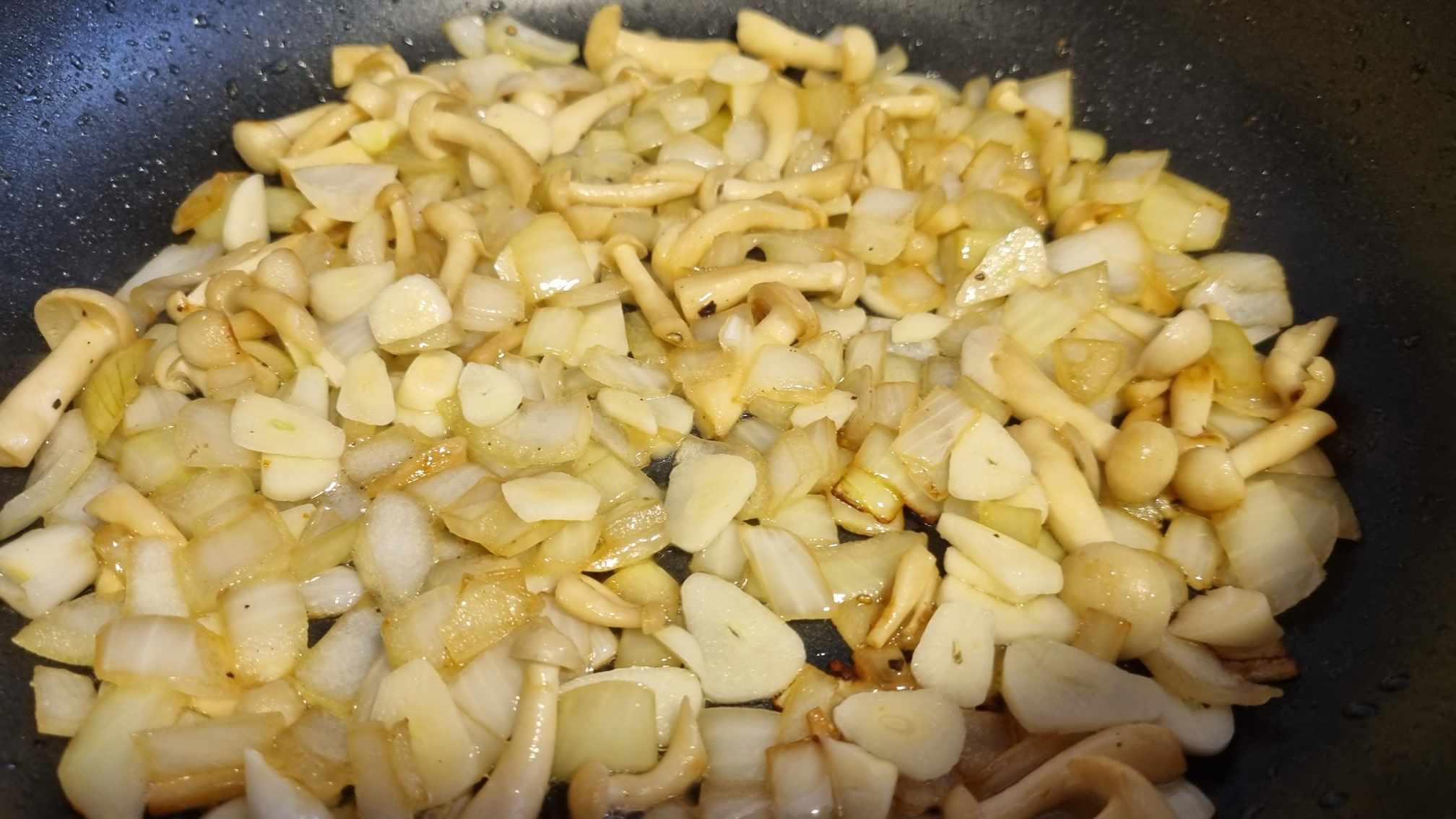
Sweat the onion and mushrooms on a medium heat, add the garlic and whatever other vegetables you want, and mix them together well stirring all the time. Don't season with too much salt yet.


Add the rice, let it fry for a minute, stir continuously, then start pouring in the chicken stock. Once bubbling, turn the heat down and add more stock every now and then to keep the contents from drying up and burning.


After 5 or 6 minutes, put the secreto back in and mix all the ingredients well. 

From the moment the stock goes in, you will need between 12 and 15 minutes until ready to eat.


Saturday, 4 November 2023

Recipe CXXXIX - Arroz Con Salchichas, Carne y Garbanzos


So I've rocked up in Spain. In August, we made the transition from Germany to Valencia and the chances of us returning north in the foreseeable future are pretty remote. What's more, I'd like to tell you about a theory of mine, based on this assumption: 

Spanish cuisine is head and shoulders above Italian. Why? Because it's been allowed to develop and adapt. And I think it's because of one very small but crucial difference - Italians name their food after either the place it was invented or the person who created it, and thus it is fixed in stone. Forever. There is no diversion from the recipe, or someone there will lose control and give your culo a good, hard schiaffeggio. 

In Spain, there are recipes named after places or people too, such as Paella Valenciana or Salmorejo Cordobés, but restaurant menus generally list items based on their ingredients, and for this sole reason, Spanish food has come on leaps and bounds in the twenty-first century, while Italian cuisine has painted itself into a corner, something the great Pellegrino Artusi would have definitely frowned upon.

Attempts at adapting recipes put most traditionalists (therefore most Italians) off - try adding some fresh sage in the ragù and watch them go nuts. Spanish restaurants not only offer a more diverse range of food, they are also much less pretentious. That isn't to say Italian food is bad; it's just a lot of it is underwhelming and rather outdated.

This recipe is one I adapted from a delightful dish I was served last week at the place round the corner from our office where we eat lunch three or four times a week. And this is the beauty of Spanish food - just choose the ingredients you want to add, which is why many of them below are optional.

Ingredients:

Four sliced longaniza sausages, or similar (thin pork sausages about 12cm long)

Two sliced black pudding sausages (optional)

350g diced veal

350g chick peas (optional - mine had some sliced truffles in)

3 diced carrots (optional)

Other diced vegetables, e.g. green peppers, peas, aubergine

1 large diced onion

2 to 4 cloves of garlic

350g traditional rice

1 litre meat broth

Olive oil for frying

A little salt and pepper

Some dried herbs (optional)

Some water (optional)


Instructions: 

Firstly, put your olive oil on medium heat and add your vegetables and garlic. 

Put a little salt and pepper in it and fry gently into a sofrito. Then add your sausages and meat and fry until they are sealed. 

Add your chick peas and the rice and start slowly pouring in your broth, letting it reduce before putting in some more. 

Keep this up for 15 to 20 minutes, then serve piping hot.

It should have a creamy and sticky texture.

¡Que aproveche!


Wednesday, 11 January 2023

Recipe CXXXVIII - Beef Wellington Made Simple

Yes, it's been a while since I posted... once I reached a hundred, I decided to relax a bit. Also, having three young kids and precious little time for such luxuries, means I'm more likely to spend my free time cutting the grass or repairing a leaking tap than I am writing recipes...

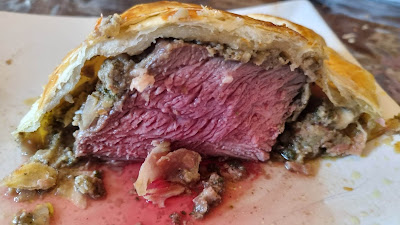
This was the meal I cooked on the last day of the festive season, and I was pleasantly surprised by the results. Take no notice of those who want you to be perfect with all the silly technical details - as long as you get the ingredients to your satisfaction, a Beef Wellington is actually less fiddly work than making a lasagne.

There are two adults and three small children in the house, so I didn't make a huge one, hence the final photo making it look like a pasty... I can assure you it was actually much bigger than that.


Ingredients:

Beef fillet

Olive oil

7 to 10 brown mushrooms

2 red onions

2 or 3 cloves of garlic

A small glass of dry white wine

A cube of butter

Fresh herbs - I used sage, as I love it, but thyme is the traditional one

6 or 7 slices of Prosciutto or Serrano ham

A roll or two of puff pastry

1 or 2 beaten egg yolks

An appropriate amount of clingfilm

A blender or a bowl and hand blender


Instructions:

Put the beef in the oven for 25 mins at 200°C. While this is going on, blend up the mushrooms, red onions, garlic, herbs, some olive oil to make a duxelle, then fry it gently in more olive oil, adding the wine to give it some extra flavour. When it's time, take the beef out and let it cool down: it shouldn't be too well-cooked.

Lay the pastry out flat and put it on some clingfilm, so you can remove the shop-made paper (it's sometimes sticky and can ruin your pastry).

Place the prosciutto on the middle of the pastry layer where your beef will eventually go, and put some duxelle on the prosciutto. Put the beef on top, and spread the rest of the duxelle on the beef until it is covered.

Wrap the pastry over the top, fold in the corners, and glaze the pastry with an egg, sealing all the joins. Make some incisions in the surface of the pastry with the back of your knife, making sure you don't make a hole.

Recommended but not obligatory: put it in the fridge for 20 minutes. Glaze the surface once again, place the whole thing in the oven for 25 minutes on 200°C.

Let it rest for a few minutes before carving, preferably using a sharpened knife. Enjoy!


Sunday, 12 December 2021

Recipe CXXXVII - Pot Roast Melon d'Agneau

Fusion Food: two words, when seen together, that strike fear into any decent, self-respecting food lover anywhere. If you want teriyaki with empanadas or tagine-cooked pierogi, you are welcome but please don't even think about inviting me for some because first, I'd rather cut off my nipples with a sharpened spoon; and second, I will never be able to be seen with you in public ever again.

 Anyhow, there are some circumstances where this might work, so you are always free to suggest it... if you dare. And one of those circumstances took place in my kitchen this afternoon. I decided to combine my acquisitions from the greengrocer and butcher's shop in Sierck-Les-Bains with a great (acceptable) American culinary tradition and make a pot roast with French ingredients.


Ingredients (feeds between 4 and 6 hungry people): 

One boneless shoulder of lamb, bound like a ball.

Enough potatoes for your dinner guests

One or two onions

Five cloves of garlic (crushed with a knife)

Several carrots (I chose orange and red ones)

Brussels sprouts, halved

Three or four sprigs of rosemary

A lot of olive oil

A glassful of red wine

Salt and pepper to taste


Instructions:

Set the oven for 180°C. Cut, peel, slice the vegetables to your satisfaction; parboil the potatoes.

Take the lamb and sear it in a pan until the outside is sealed; cover it in salt, pepper and oil.

Take a large roasting pot with a lid and put the vegetables randomly in the bottom, giving them a stir in the oil. Add some salt.

Put the potatoes in with some more oil, and the lamb on top of that, with the rosemary and garlic spread around evenly. Cook for twenty minutes uncovered. Then add the red wine and put the lid on, reduce the temperature to 120°C for an hour, then take the lid off for a further 20 minutes. 

Remove the lamb, cut into slices, and apportion the vegetables accordingly. 


If you're feeling adventurous:

A good stuffing would round this meal off nicely. Here's one that would work:

Ingredients:

About two hands full of yesterday's bread, broken into very small pieces
1 onion
4 cloves of garlic
Some fresh herbs (rosemary, thyme and sage should be good)
Salt and freshly ground black pepper
A binding agent like lemon juice, milk or an egg

Instructions:

Put the stuffing ingredients (except the bread) into a mixer and give it a thorough blitzing.
Then add the bread and turn it into a pâté-like consistency. Roll balls out of the mixture and add to the pot at random. Alternatively, spread it out over the top of the lamb.

Cook with the other ingredients.

Sunday, 30 May 2021

Recipe CXXXVI - Summer Food: Potato Salad with Pickled Red Onions

This year's weather so far has been... well... forgettable at the best of times. Last year, by the end of March, we had already spent several days outside, lunches in the garden, walks by the river, socks put firmly in the drawers until October. Not so this year. Today was the first time we had breakfast outside, although it was still slightly chilly, but I didn't care. So by the time lunch came around, it was a pretty decent early summer afternoon. It reminded me of the summers of my youth, back before our current parlous state, when we would all be able to mow the grass without ending up with sunstroke and a severe case of dehydration. So to celebrate this gorgeous day of fluffy white clouds, a gentle breeze and the chirrup of birds, I made two salads to go with a lovely piece of duroc pork. This is a real crowd-pleasing recipe and one that you can easily take with you to picnics or BYOF gatherings.


Ingredients: 

1kg floury potatoes

A handful of chopped chives (optional)

Some olive oil

Some mayonnaise

3 medium-sized red onions

150ml+ apple cider vinegar

Sugar and salt to taste


Instructions:

Pre-boil the potatoes and leave them to cool. Floury potatoes are good for this recipe because they give off a creamy texture and go very well with the combination. Put in a small amount of olive oil as the potatoes will be sticky and this will let you separate them on the plate more easily. Once they are cool, add some mayonnaise and chopped chives. Not much mayonnaise, just enough to coat.

While the potatoes are cooling, you can make your red onion pickle. Heat some apple cider vinegar in a small saucepan on a low flame - you don't want to evaporate it, as it will be used later in the jar. Cut up the onions as small as possible and add them to the hot vinegar. Add sugar and salt to the pan until you get the right balance of sweet, salty and sour. The onions should be sweet more than the other two, as it will complement your potato salad very well.

Once you have the balance, pour the liquid and the onions into a jar and leave to cool. Add to the potato salad and serve cold.

I served ours with a piece of Spanish duroc pork and a crispy salad with balsamic vinegar, olive oil, honey and mustard.

I shall be making this once more very soon.


Tuesday, 29 December 2020

Recipe CXXXV - Fish Pie

Another staple of Christmas in various parts of Europe is the fish. In central Europe, the carp is the most common type, as it's a freshwater species and can be sourced in large quantities and bought a few days in advance. It's quite common in Czechia or Slovakia to see huge tubs of carp on market squares with customers queuing up to select their own. As they are alive, they are transported home very carefully and usually kept in the bath until its big appearance on Christmas Eve. 

It is served then because 24 December is known as Štědrý Den (Generous Day), and the last day of Advent fasting. So it was considered to be a good way of kicking off the feast, as it is a rather tasteless and boring fish, but also a more substantial meal than what they would have previously had. 

So we're not going to make our fish pie with carp; we need something with a little flavour and maybe some character. I went for cod and sea bass. For anyone who knows me, they will be astonished that I actually made a fish dish at all, let alone a salt water fish dish. 

I actually despise fish - for me the word "poisson" has one too many Ss. But every now and again I get the urge to dig into a bit of briny sauce and yesterday was one of those days. 

Ingredients:

450g-500g mixed deboned fish, e.g. haddock, cod, sea bass 

300ml-400ml milk

4 or 5 carrots, sliced

A large red onion, cut into small pieces 

20 fresh ground peppercorns 

A bunch of fresh parsley, cut up small

A couple of tablespoons of flour

As many peas as you want, and some green beans if you want 

Some white wine (optional)

8 to 10 medium-large potatoes

300g butter

200g grated cheese, e.g. Cheddar or Gruyère


Instructions:

Cut up and roll the fish in some pepper and flour; check for bones. Put the oven on 200°C. Peel the potatoes and boil them gently in salted water until soft. Mash them up with some butter and pepper. While the potatoes are boiling, put some butter in a fairly large high-sided frying pan and while it's gently heating up, add the onions, carrots, and a little flour, followed by the white wine, peas, fish and parsley. When the white wine has reduced but before the pan dries out, add the milk and cook with lid on for about 15 to 25 minutes to let the flavours run.

Take a large, high-sided baking dish and pour the fish mix in there. 


Take the mashed potato and spread evenly on the top. Some like to make little dollops with an ice cream scoop but it's not important. Put the grated cheese on top and place in the middle of the oven for 25 to 30 minutes. 

Serve immediately and enjoy!


Sunday, 27 December 2020

Recipe CXXXIV - Caramelised Brussels Sprouts and sauteed Wild Boar Medallions

It's that grey week between Christmas and New Year's Eve when very little happens except finishing up all the food you didn't gluttonously consume during the main feast days and hanging around for that great anticlimactic moment when the numbers on the clock signify that it's 1st January of the following year. But this year is different - the last week of the year of cancelled invitations and postponed bookings due to the great pestilence of 2020 will tick by more slowly than the rest of the year with the tortuous effect of a dripping tap and those leftover vegetables will have no other mouths to enter than your own, so what better way to spend a miserable December night than to make something different with your remaining food? Here's a simple but delightful take on the humble Brussels sprout, the most underestimated Christmas ingredient of them all, plus a splendid little side dish of wild boar.

Ingredients for the sprouts:

500g Brussels sprouts 

Minimum 20 fresh ground peppercorns 

100g butter 

Spoonful of nutmeg 

Some salt

Instructions:

Heat the oven to 200°C. Do the usual removal of the outer leaves, then slice the sprouts in half. Melt the butter on a low flame and pour into a wide baking dish - this is to leave plenty of room so they can sit with the insides on the base. Pour the butter into the baking dish, then cover the sprouts in salt, nutmeg and pepper before placing them flat in the butter.

Cook in the oven for 25 minutes or until soft.


Ingredients for the wild boar medallions:

350g to 500g wild boar fillet cut into slices 

Plenty of ground black peppercorns 

6 mushrooms of your choice 

1 red onion

3 cloves of garlic

A glass of brandy

150ml to 200ml fresh cream


Instructions:

Roll the boar in the pepper and some salt, cut up the mushrooms, onions and garlic. Put some butter in a wide frying pan on a medium-high temperature, fry the medallions until they are sealed, add the garlic, onions and mushrooms, pour over some brandy, let it reduce. Then add the cream and let it thicken.

Done!

I also caramelised some carrots with sugar using the same recipe as the sprouts and they went down very well. 


Thursday, 9 April 2020

Recipe CXXXIII - Latticed Apple, Sultana and Cinnamon Pie


As the days of confinement go by, I find myself more and more returning to the food of my mother and grandmother; perhaps this is a kind of subliminal act of reassurance to my family. Or maybe it is because I have a newly-found sense of nostalgia. Either way, this one is a lot more elaborate than my mother's apple pie, mainly because she was a fifties housewife: only the staple ingredients and no embellishments. She would never have found things like cinnamon or dark brown sugar back then, due to rationing. 

Although this ended by the sixties, the general trend remained firmly in the camp of vegetables and potatoes boiled to within an inch of their lives, and meat cooked in the oven with no decadent additions like herbs or garlic. So my mother's apple pie was generally a treat for us all. She peeled the apples and sometimes boiled them too, but I tend to err on the side of adventure when it comes to pie baking.

Ingredients: 

For the pâte brisée (shortcrust) pastry:
300g flour
150g cold butter, diced into cubes
Half a teaspoon of salt
2 large dessertspoonfuls of sugar
A tiny drop of milk (or water, depending on taste)
1 egg
Some extra brown sugar for the topping

For the filling:
3 apples, cored and sliced into C-shaped pieces (leave on the peel for extra flavour)
A handful of sultanas
A good two dessertspoonfuls of dark brown sugar (otherwise just ordinary brown sugar)
A teaspoonful of cinnamon
Some five spice
Some lemon juice
Some white sugar if necessary
Clear honey (optional)

Instructions for the pastry:
Put the flour, salt, and sugar into a bowl. Add the butter and begin to massage it into the flour until it looks like rough breadcrumbs. Add a few drops of milk or water - you don't need much to get a good ball of dough. Put it in the fridge for a minimum of half an hour, then break it into two pieces (size ratio - 70% to 30%). Roll out the larger ball until it fits the entirety of your round baking tray.
Keep the last part for later.

Instructions for the filling:
Put the oven on to 180°C. While your pastry is in the fridge, put the apples into a bowl, squirt your lemon juice over them to keep their freshness. Throw in the cinnamon, brown sugar, five spice and sultanas. Give the whole thing a very good mixing-in so that it becomes consistent throughout.

Then put it into the baking tray and flatten it out. Put some honey on top if you want.

Take the smaller ball of pastry, roll it out, and cut into strips. Put them on top in a criss-cross pattern. It is not important if they are uneven or unequal in size or width, as after some time in the oven, they will find their own shape.

Glaze the top with egg, and put on a final dashing of sugar, then put it in the oven for 45 to 50 minutes, and serve immediately with cream, ice cream or custard.

Monday, 30 March 2020

Recipe CXXXII - Traditional Baked Rice Pudding

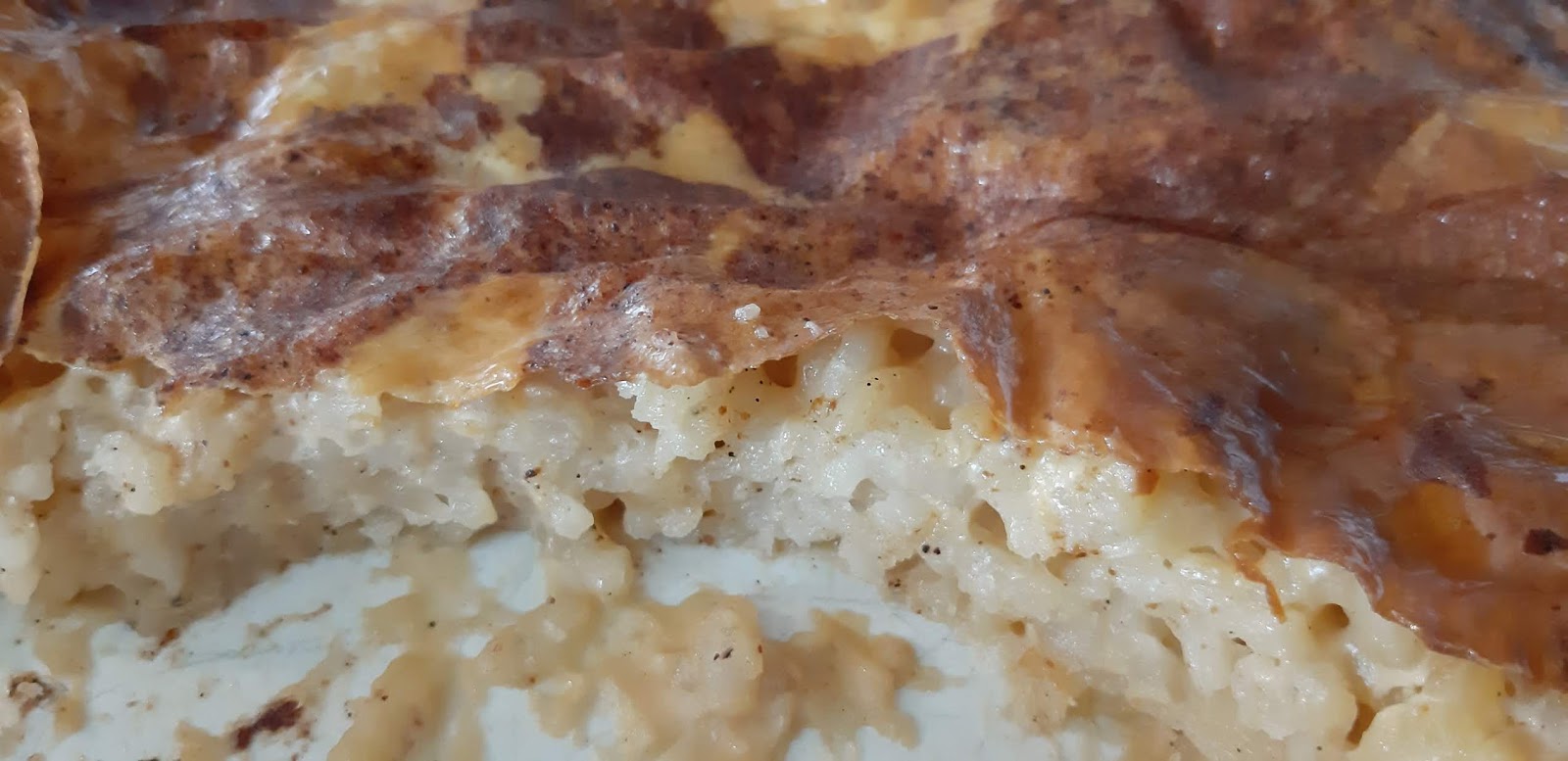
One of the abiding memories of my youth was the Sunday roast dinner and my father's party piece was his rice pudding, which he would nail week after week, and there would still be some to nibble on as late as Thursday. His recipe used evaporated milk, which gave it a creamy tang, but I make it with a few other ingredients. Every traditionally made rice pudding has that dark brown layer on top, which is ground nutmeg, and is essential to the authenticity of this most British of desserts.


Ingredients (* = optional) to make enough to fill a baking tray: 
250 g dessert (short grain) rice
1 l whole milk (3.4% fat)
250 ml full cream
1 vanilla pod
25 g to 75 g brown sugar
25 g to 75 g white sugar
1 nutmeg plus grater
* Cinnamon
* Five spice
* Some sultanas, diced apples or pears
* Some saffron
Some butter to grease the baking tray

Instructions:
Put the oven on to 150°C max, and butter a baking tray with minimum 7cm-high sides. Put the milk and cream into a saucepan and gently heat it up, making sure it doesn't boil.

Cut open the vanilla pod and scrape the contents into the pan, then throw in the pod. Once it is about to boil, remove it from the heat and let it settle for a few minutes.

While you are waiting for the mink and cream to heat up, put the rice and both sugars into the baking tray. At this point, you can also add any other of the optional ingredients. Then pour the milk and cream over the top, and give it a good stir so that it doesn't end in overcooked clumps of rice.

Grate or sprinkle as much nutmeg on the top as you want. Really, it's the most essential thing - the rice pudding without the nutmeg layer is like pasta without sauce.

Finally, put the baking tray in the oven for two hours or so (possibly half an hour longer), when the rice pudding should be soft and creamy with a splendid nutmeg roof. 

It is great both just out of the oven or cooled in the fridge. If it is done right, when it is cold, you should be able to cut slices with it, which you can serve to children in portions like sweetie bars. They love it with some jam.

Put a layer of tin foil over it, if you want to keep it in the fridge.

Apart from that, enjoy changing the ingredients slightly each time. I love the pure creaminess of a plain rice pudding, but I find cinnamon and five spice really do it for me. I also love to cover mine in brown sugar to eat.

Thursday, 26 March 2020

Recipe CXXXI - Slow-Cooked Corona Chicken plus Meatballs in Ratatouille

These times of isolation have brought out the imaginative spirit in me. Yesterday, I broke open the fridge to use up any vegetables that seemed to be going soft, and to create something that would last a day or two. So I came up with this very tasty slow cooker that I've named after this epoch of segregation.


Ingredients:
10 tomatoes
2 spring onions
1 red onion
1 ordinary onion
1 red pepper
3 diced carrots
Worcestershire sauce
10 leaves of sage, cut finely
Garlic is optional
Red wine (you choose the amount)
1 whole chicken - slit the breasts and leg open to allow the flavour in
Ground black pepper and salt rubbed into the chicken
1 baking tray with lid or aluminium foil
Food blender
Butter
Lashings of olive oil

Accompaniment: sautéed potatoes

Instructions:

Turn your oven on to 180°C and peel and cut into 2cm-sized pieces.

Take out your food blender, and put in the tomatoes, three sorts of onions, red pepper, Worcestershire sauce, garlic, sage, some salt and pepper. Blend everything to a fine pulp and leave to settle before blending again.

Take out your chicken, cover it in oil, salt and more pepper, place it and the diced carrots in the baking tray then pour over the blended sauce, making sure your chicken is entirely saturated. Spoon more on top if necessary.

Cover it and place in the oven. Cook on 180°C for 30 minutes, then turn down to 120°C and go off to do something constructive while your house starts to smell appetising.

About 45 minutes before you want to eat, parboil the potatoes, then fry them in butter and olive oil on a medium heat until they are nice and brown. Remove the chicken, cut into the appropriate number of pieces and put on the plate with the potatoes. Spoon some of the sauce onto the food and save the rest for tomorrow.

With the rest of the sauce:
The day after, I made a ratatouille with meatballs and rice using the rest of the sauce. Needless to say, it was the heaviest rata I've ever had, but it gave me a nice warm full stomach.

Ingredients:
Aubergine
Red or green pepper
Onion
Courgette
5 large tomatoes, roughly chopped into large chunks
Whole cherry tomatoes
Green beans
Olive oil
500g minced beef
Herbes de Provence
More red wine
Salt and pepper
Rice
The rest of the sauce

Instructions:

Put some pepper, herbes de Provence, salt and minced beef into a pot and mix in well. Make small balls from them. Take a tray and put them in the fridge for half an hour or so.

In a casserole dish, fry the vegetables except the tomatoes on a medium heat until they are soft, then add the meatballs and seal them on all sides.

Add the tomatoes and some red wine, put a lid on, cooking at a medium-low heat allowing the juices to run but not evaporate.

Then add the remaining sauce from yesterday, and simmer for 30 minutes to an hour. Cook your rice in the meantime and add it to the mix at the end, so as not to absorb all the juices while they are cooking.


Wednesday, 18 March 2020

Recipe CXXX - Dorset Apple Cake


One of the advantages of being holed up in a health crisis is the opportunity to do all of those things we haven't had time to do in recent times. It's been a while since I posted a recipe; this is due to a number of things: firstly, I was gravely ill a couple of years ago, then I got a huge amount of work to do, and finally I had three kids in as many years. So please excuse the lack of posts. I hope this recipe will be the first in a revival of my blog, and I would like to thank a lady with the initials AK for the inspiration.

This one is a simple but delicious recipe; Dorset, Somerset and Devon are very well known in Britain as being the home of the apple. It's where most cider makers are based, and as there are so many apples down there (there is even the town of Appledore in Devon, just to reinforce the concept), they make this lovely cake with the local produce. 

This cake is best served warm, but when cold, tastes different but no less intense.

Ingredients:
2 cooking apples, cored, peeled and chopped, then doused in the juice of half a lemon
250g of plain flour
8ml baking powder
130g cold butter, cubed
180g light brown sugar
1 beaten egg
50ml milk, possibly a little more needed later
As much cinnamon as you dare

I also added five spice, but it's not in the original recipe.

Instructions:
Preheat the oven to 180°C and grease a round cake tin with butter

Once you have dealt with the apple and lemon juice, put it aside for a few minutes while you do the rest.

Mix and sift the flour and baking powder, then throw in the butter. Mix well with your fingers until it has the consistency of breadcrumbs.

Add about four-fifths of the sugar, plus most of the cinnamon (and five spice if you like), plus the apples, then dump the egg on top, mixing thoroughly until it reaches a good homogeneous light-brown colour.

Then pour in the milk until it has a soft texture that falls slowly off a spoon.

Transfer everything to the cake tin and flatten it out. If the dough is of the right consistency, this should work almost without the aid of a utensil.

Sprinkle the rest of the sugar and some more cinnamon over the top, and put it in the oven for about 45 minutes.

When it's done, let it set in the cake tin for five to ten minutes, but not too much longer, because as I mentioned earlier, it's fantastic to eat when still warm.

It goes splendidly well with a cup of coffee - enjoy!

Sunday, 4 February 2018

Recipe CXXIX - Roast Spatchcock Lemon Chicken

I have started shopping in Luxembourg these days, as the kind of fare on offer is more international. This week, they had a splendid Portuguese theme and were selling all kinds of cheeses, vegetables, sea salts, fruits and meats from the country. There were some delightful pastéis de nata, the Portuguese national calling card, and some rather interesting spatchcock chickens. Now usually, I do my own, but what with so many responsibilities these days, time is of the essence, so I bought it. Now, it's winter, so I couldn't really grill the thing outside in the snow, but I wanted to do it some justice, considering its provenance. This recipe was inspired by a meal I had in Andalucía many years ago, which remains one of the most memorable gastronomic experiences I had.


Ingredients:
1 spatchcock chicken
4 large cloves of garlic
1 onion or 4 shallots
3 lemons
2 sprigs of rosemary
Some olive oil
Salt and ground black pepper

Instructions:
Turn on the oven to a maximum 150°C.

Spatchcocking a chicken:
If you have a whole chicken, place it with the breast on the cutting board, and cut along one side of the backbone with a sharp knife or the kitchen scissors. Then cut the other side of the backbone and remove it. Now turn the chicken over to the other side and open it up by pressing on the breastbone. You can use your hands to flatten it totally.

Then...
Having cut up 2 of your lemons into thin slices, place one of them on the bottom of an oven dish along with thick slices of garlic and onion.


Open up the skin of the chicken at the neck with your fingers and fill it with slices from the third lemon. Put some garlic and onion in there if you want too. Finally, spread salt, pepper and olive oil randomly on top of the chicken and cover the oven dish with tin foil. Put it in the oven on a low heat for 90 minutes to 2 hours.


Then take off the foil and roast at 180°C for a further 30 minutes.


I made potatoes roasted in olive oil and rosemary, and to bring some colour, Brussels sprouts fried in butter and nutmeg.


Bom apetite, as they say in Old Lisbon!

Tuesday, 15 August 2017

Recipe CXXVIII - Lasagne rolls done two ways

Pasta is a very versatile food, and you can do many things with it, although as Italians still can't see past Artusi, they are stuck with an outdated recipe book, so it is up to us non-Italians to push ahead with new recipes and ideas. This one is an adaptation of a video I saw on the Internet. I didn't really like the recipe it proposed so I took it a step further and added some more ingredients.

You are making two kinds of rolls - one with ricotta and pesto, the other with mince and béchamel.

Ingredients: 


Lasagne sheets, 1 packet (other pasta as backup in case the lasagne sheets break up, which is not uncommon!)
1 jar of green pesto
1 tub of ricotta
Some grated mozzarella
350g minced beef
1 onion
4 cloves of garlic
Some fresh herbs
Some Cheddar, grated (other cheeses like Pecorino, Manchego or Gruyère will also do)
Ground black pepper
Olive oil
Butter, flour, nutmeg and milk (for the béchamel)
Tin foil for covering

Instructions:

Put your oven on to 200°C. Take your ricotta, pesto and a handful of mozzarella, and put them in a bowl. Mix well.

In the meantime, parboil some lasagne sheets one or two at a time. Don't do all, as they will stick to each other and become an unmitigated disaster. Take them out of the pan carefully making sure not to break them. If they split a little through the middle though, that's not a problem.

Lay them out one by one on a cutting board and paste the ricotta mixture over them. Then roll them up like a carpet and lay them in a baking tray with olive oil in the bottom.


Then take the mince, the onion, garlic and some black pepper and fry them in olive oil until the meat loses its red colouring. Add some grated Cheddar and the herbs to the mixture.  It is at this point you should make your béchamel. I won't insult your intelligence by telling you how to make that. Make quite a lot, as you will need it for later. Add some to the mince mixture and do the same - roll them up and put them on the baking tray.


They should look like this:


Take the rest of the béchamel and spread it on top of the rolls, then sprinkle over more grate mozzarella and Cheddar, plus some ground black pepper.


Cover the tray in tin foil, put it in the oven for 20 minutes and a further10 minutes uncovered.


The results are very satisfying indeed!


Wednesday, 9 August 2017

Recipe CXXVII - Spicy Lamb and Red Wine Pasta

I was thinking about what to cook today and I fancied something spicy without the tomato-based sauce and something saucy without the cream, so I whipped this one up - it's really easy to make and perfect for these cooler summer nights.


Ingredients:
350g lamb, sliced into bite-size pieces
1 onion, diced
5 cloves of garlic, diced
1 hot red chili pepper, cut into round slices
6 to 9 mushrooms, diced
7 to 10 small tomatoes, halved
12 to 15 black peppercorns, ground
2 sprigs each of fresh rosemary and oregano or thyme
1/3 of a bottle of wine
(I use Primitivo from Salerno usually, but in this case a nice Merlot is perfect)
350g pasta, either long or short
Salt to taste
Olive oil

 Instructions:

Take the fresh herbs, black pepper, salt and a quarter of the diced onions and garlic, and mix them in a bowl with the lamb.

Rub it all well in to the meat to make sure the flavour takes hold.


Pour the red wine over the top of it and put it in the fridge for a while (minimum 30 minutes) until you are ready to cook.


Remove the lamb from the wine (it will have gone a darker shade of red now), but keep all ingredients.

Put the remaining onion, the red pepper, the mushrooms and the remaining garlic in a hot pan with a good dose of olive oil and stir-fry until they soften.

Remove as much from the pan as you can leaving the oil there (or top it up), and put in a bowl for a while,then fry the lamb in the flavoured oil.

Then add the other ingredients and fry for a further 2 to 4 minutes, before you pour the wine containing the herbs on top. While it is reducing and thickening a little (you can always add more red wine if necessary!), boil your pasta. Once the pasta is ready, mix it in with the sauce and serve while hot.


Wednesday, 30 November 2016

Recipe CXXVI - Eton Mess

You're going to love this one. If you have a large group to cater for, or you have kids who just need to find their smile after eating all their hated vegetables, this is the one for you...
Started at Eton College in the UK, this is served up at cricket matches against their bitter rivals Harrow, and it goes down a storm...

Ingredients (4 people): 
300ml of fluid cream
a cup of forest fruits (although strawberries are ideal)
some meringue (crushed into smaller pieces but not too small)
sugar depending on taste

Instructions:
Whip the cream until it makes peaks. Crush the forest fruits until the juices run. Drain and save the juices in a cup. Gently mix in the fruits, the crushed meringue and the juice. Taste it - if it needs some sugar, add carefully. If not, get the largest spoon in the house and fill your face full until you can't talk any more!


Friday, 19 February 2016

Recipe CXXV: Minced Lamb Ragout

PREAMBLE: Recently, I have been giving a lot of thought to the process of making meat. And especially to the principles and ethics behind it. There are a lot of videos out there, some let's face it on the wacky side and some very shocking, on the way meat is made. There are videos of shocking cruelty, as well as heartbreaking suffering. Some of the things animals put up with are atrocious. Good animal husbandry is, however, expensive. 

To make good food without breaking your budget is what many of us strive for, but this comes at another cost. Many farmers now are overwhelmed by the need to mass-produce and at the same time supermarkets force them to cut corners because they want to have the lowest price amongst their competitors. We should not be surprised to learn about these distressing facts. When I see a chicken for sale for 3 or 4 euro, I want to say a silent prayer for it. If only I believed, I would.

I would prefer to pay up to double the going rate for my meat, if I know where it was sourced and I can be assured the animal led a wholesome and happy life. And how can we stop farmers going out of pocket, supermarkets from undervaluing their stock and most importantly of all the unnecessary suffering of animals? By eating less meat and paying more for it. A more varied diet will also benefit our health.

AND NOW THE RECIPE...
At the moment, I am spending the month in the Belgian city of Leuven, which has several very good butchers, all with solid reputations. Rondou is the butcher par excellence in the city, and it was here that I came to buy some minced lamb.

Back in Germany, the idea of mincing lamb is as odd as the idea of buying clothes because they're smart, not because they're cheap; or not complaining if a train is one minute late. Which is why I want to do this recipe, because even though it's very simple, in fact one of the staples, it is the main ingredient that is the star of the show.

When people in the town where I live go to the butcher, they ask for meat with very little fat. Fat, they think, is bad. I cringe at how the butchers remove the skin and fat layer from a pork cutlet; I die a thousand deaths when I see them slicing meat the wrong way because it's just the next bit; but I often have to leave my place in the queue when I hear someone complaining that their steak has too much fat. They don't realise that the marbled effect in steak is what gives it its tender qualities. 

What does lean meat do in the pan or oven? It hardens to the consistency of an old boot. Why would I want to do that? I want food that appeals to my eyes and stomach; that is easy and pleasing to eat; that gives me a memorable experience; that appeals to my senses, as well as fills me up. I do not want to eat just to take on the necessary calories to get me through the rest of the day.

Method: Lamb meat is by nature fattier than other meats; I guess it's because sheep run about less than other animals... anyhow, it makes a very succulent ragout.


Take the minced lamb and chop 4 cloves of garlic for every 500g. Add fresh or dried herbs, mainly rosemary and thyme, plus the appropriate amount of salt and pepper. Give it a good mixing until it is consistent. You can put it in the fridge until required, if necessary.


Ingredients:
Half a pepper, 5 brown mushrooms, 2 onions (one red, one white), half a courgette, some fresh tomatoes, some tinned tomatoes, some red wine, olive oil, salt and pepper to taste


Slicing technique:
Cut your courgette lengthways down the middle twice, but not to the very end. This will make it easier to cut into slices.

Put a good thick layer of olive oil in a pan and fry the onions on a medium-low temperature for a minute, followed shortly by the other vegetables (except tomatoes). Let them sweat for a while. Add the minced lamb and mix thoroughly until all ingredients are spread equally throughout the pan.

Add the non-tinned tomatoes and once the mince has browned, add the tinned tomatoes.

Put in as much wine as you like - I use half a bottle over the coming 30 minutes, keeping the whole thing nice and moist.

I served mine with linguine, but some boiled potatoes would have been just as good.