Pages

Showing posts with label rice. Show all posts

Tuesday, 21 November 2023

Recipe CXL - Arroz con Secreto Ibérico

We have to talk about secreto ibérico. In English this translates as Iberian Secret, and its name is not ironic. Like a lot of Spanish food, it has been overshadowed by a small collection of more commercial fare to feed the masses on the Costas: gazpacho, tortilla española, paella... but these are the Spanish equivalent of a carbonara or a pizza: they're so popular it's easy to find places that make them incredibly badly.

Secreto ibérico is a cut of meat somewhere around the shoulder from the black pata negra pig. Not to be confused with the duroc sort, it has blackened feet (pata = animal foot, negra = black) and is usually dark in colour. The breed can be classed as indigenous, considering it is probably related to those brought over by early mercantile sailors from the Levant about 2700 years ago.

But what makes the pata negra pig so special is it has the most splendid life: it is a government-protected creature that is granted 5 acres of forest per animal to be allowed to wander the primeval oak forests eating acorns, mushrooms, and the wild vegetation found in these most rural parts of Spain. 

There are four designated areas where the true pata negra pig is raised: 

The town of Jabugo in Huelva province close to the Portuguese border;
Guijuelo, near Salamanca, also near the Portuguese border;
Valle de los Pedrochos, to the north of Cordoba; and
The region of Extremadura, right next to Portugal.

So due to its utterly idyllic existence giving it a supple muscle tone and a slightly nutty flavour, the meat for cooking has a marbled Wagyu-style fat arrangement that makes it supremely tender, and is therefore highly prized by any restaurant in Spain that doesn't cater to the masses. The ham from acorn-fed pigs is cured for up to four years, and they are hung up with their black trotters still attached to prove they are from pata negra pigs.

Ordinary pork is notoriously easy to overcook until it's as tough as a shoe sole, but secreto ibérico stays tender longer, allowing for it to be nicely browned on the outside, burnt even, and still retain its succulence on the inside, making it a barbecue essential. It goes well with many types of food, such as this delightful combination from a restaurant in Mestalla called El Rinconet (see the photo below), which I recommend very highly.

The cut of meat is generally a little like a beef flank steak and it's often cut into strips to make it easier to handle.

Secreto Ibérico from El Rinconet in Mestalla, central Valencia


But the recipe I have for you is another rice one - it's very similar to the last: I think I'm going through a rice phase. It is so simple and yet so delicious, you will travel for miles just to find some secreto ibérico for dinner every now and then!

Ingredients:

350g plain rice
450 g to 500 g of secreto ibérico, cut into strips against the fibres
1 large succulent onion
250 g shimeji mushrooms
6 to 8 cloves of garlic
1 litre of chicken stock
As many peas as you like
You are welcome to add diced carrots, green beans, or any other appropriate vegetable
Salt, ground black pepper to taste


Instructions:
Cut up your vegetables and slice the meat into strips against the grain of the muscles.

Fry the meat on a medium-high heat in some olive oil until they are sealed, adding salt and pepper. 


Remove them and place them on the side for a while.

Sweat the onion and mushrooms on a medium heat, add the garlic and whatever other vegetables you want, and mix them together well stirring all the time. Don't season with too much salt yet.
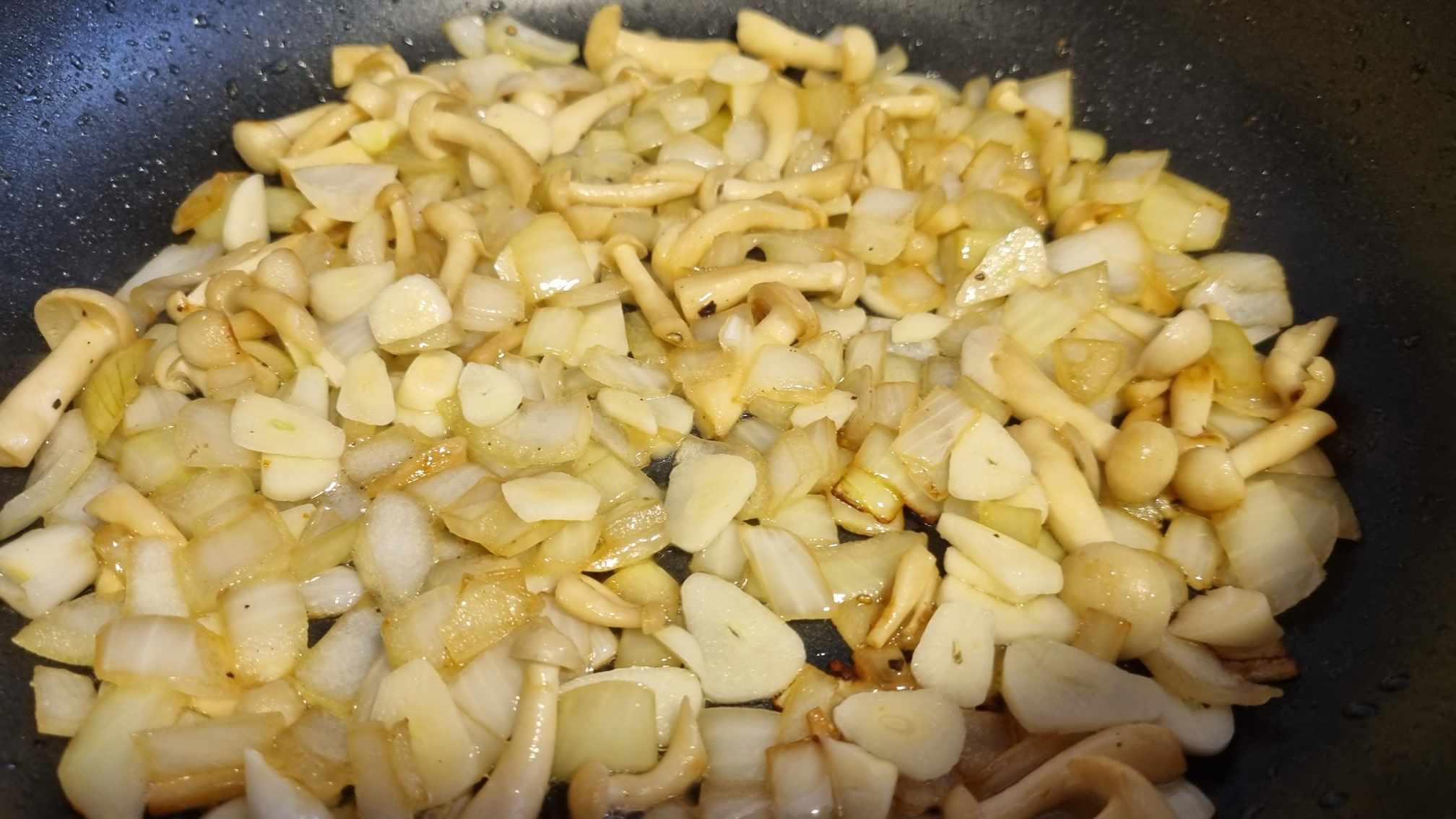

Add the rice, let it fry for a minute, stir continuously, then start pouring in the chicken stock. Once bubbling, turn the heat down and add more stock every now and then to keep the contents from drying up and burning.


After 5 or 6 minutes, put the secreto back in and mix all the ingredients well. 

From the moment the stock goes in, you will need between 12 and 15 minutes until ready to eat.


Saturday, 4 November 2023

Recipe CXXXIX - Arroz Con Salchichas, Carne y Garbanzos


So I've rocked up in Spain. In August, we made the transition from Germany to Valencia and the chances of us returning north in the foreseeable future are pretty remote. What's more, I'd like to tell you about a theory of mine, based on this assumption: 

Spanish cuisine is head and shoulders above Italian. Why? Because it's been allowed to develop and adapt. And I think it's because of one very small but crucial difference - Italians name their food after either the place it was invented or the person who created it, and thus it is fixed in stone. Forever. There is no diversion from the recipe, or someone there will lose control and give your culo a good, hard schiaffeggio. 

In Spain, there are recipes named after places or people too, such as Paella Valenciana or Salmorejo Cordobés, but restaurant menus generally list items based on their ingredients, and for this sole reason, Spanish food has come on leaps and bounds in the twenty-first century, while Italian cuisine has painted itself into a corner, something the great Pellegrino Artusi would have definitely frowned upon.

Attempts at adapting recipes put most traditionalists (therefore most Italians) off - try adding some fresh sage in the ragù and watch them go nuts. Spanish restaurants not only offer a more diverse range of food, they are also much less pretentious. That isn't to say Italian food is bad; it's just a lot of it is underwhelming and rather outdated.

This recipe is one I adapted from a delightful dish I was served last week at the place round the corner from our office where we eat lunch three or four times a week. And this is the beauty of Spanish food - just choose the ingredients you want to add, which is why many of them below are optional.

Ingredients:

Four sliced longaniza sausages, or similar (thin pork sausages about 12cm long)

Two sliced black pudding sausages (optional)

350g diced veal

350g chick peas (optional - mine had some sliced truffles in)

3 diced carrots (optional)

Other diced vegetables, e.g. green peppers, peas, aubergine

1 large diced onion

2 to 4 cloves of garlic

350g traditional rice

1 litre meat broth

Olive oil for frying

A little salt and pepper

Some dried herbs (optional)

Some water (optional)


Instructions: 

Firstly, put your olive oil on medium heat and add your vegetables and garlic. 

Put a little salt and pepper in it and fry gently into a sofrito. Then add your sausages and meat and fry until they are sealed. 

Add your chick peas and the rice and start slowly pouring in your broth, letting it reduce before putting in some more. 

Keep this up for 15 to 20 minutes, then serve piping hot.

It should have a creamy and sticky texture.

¡Que aproveche!


Monday, 30 March 2020

Recipe CXXXII - Traditional Baked Rice Pudding

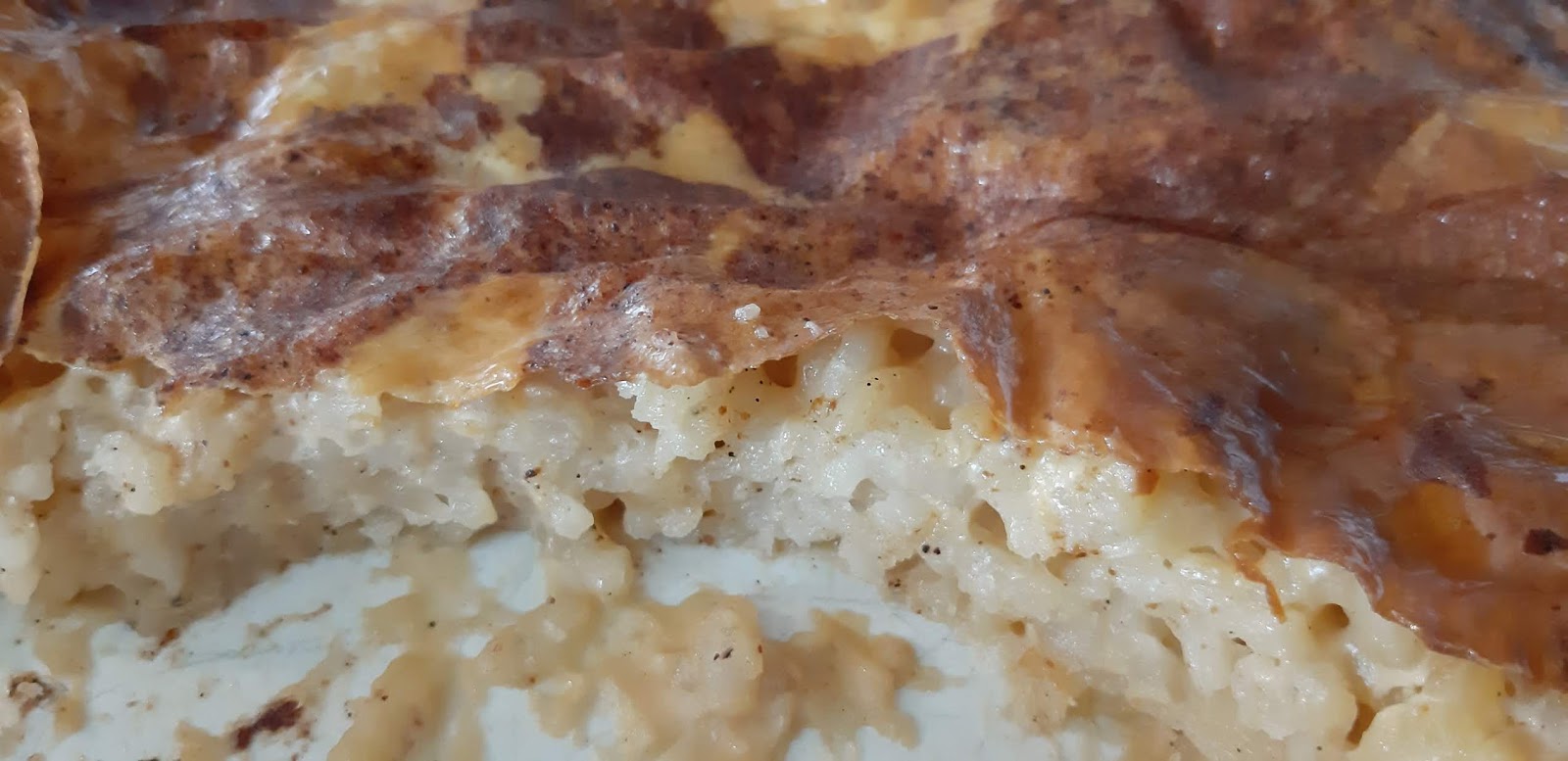
One of the abiding memories of my youth was the Sunday roast dinner and my father's party piece was his rice pudding, which he would nail week after week, and there would still be some to nibble on as late as Thursday. His recipe used evaporated milk, which gave it a creamy tang, but I make it with a few other ingredients. Every traditionally made rice pudding has that dark brown layer on top, which is ground nutmeg, and is essential to the authenticity of this most British of desserts.


Ingredients (* = optional) to make enough to fill a baking tray: 
250 g dessert (short grain) rice
1 l whole milk (3.4% fat)
250 ml full cream
1 vanilla pod
25 g to 75 g brown sugar
25 g to 75 g white sugar
1 nutmeg plus grater
* Cinnamon
* Five spice
* Some sultanas, diced apples or pears
* Some saffron
Some butter to grease the baking tray

Instructions:
Put the oven on to 150°C max, and butter a baking tray with minimum 7cm-high sides. Put the milk and cream into a saucepan and gently heat it up, making sure it doesn't boil.

Cut open the vanilla pod and scrape the contents into the pan, then throw in the pod. Once it is about to boil, remove it from the heat and let it settle for a few minutes.

While you are waiting for the mink and cream to heat up, put the rice and both sugars into the baking tray. At this point, you can also add any other of the optional ingredients. Then pour the milk and cream over the top, and give it a good stir so that it doesn't end in overcooked clumps of rice.

Grate or sprinkle as much nutmeg on the top as you want. Really, it's the most essential thing - the rice pudding without the nutmeg layer is like pasta without sauce.

Finally, put the baking tray in the oven for two hours or so (possibly half an hour longer), when the rice pudding should be soft and creamy with a splendid nutmeg roof. 

It is great both just out of the oven or cooled in the fridge. If it is done right, when it is cold, you should be able to cut slices with it, which you can serve to children in portions like sweetie bars. They love it with some jam.

Put a layer of tin foil over it, if you want to keep it in the fridge.

Apart from that, enjoy changing the ingredients slightly each time. I love the pure creaminess of a plain rice pudding, but I find cinnamon and five spice really do it for me. I also love to cover mine in brown sugar to eat.

Sunday, 10 June 2012

Recipe LX - Pork in Southern Sauce

That's southern India, not the USA. As you have understood by now, I am absolutely crazy about spices and I love being adventurous with their various combinations. This dish is one of those that makes the cooking just as enjoyable as the eating itself.

Ingredients:
500g pork
2 medium onions
1 green pepper
5 cloves of garlic
100ml-150ml white wine vinegar
500ml coconut milk
150ml tap water
1-2 tbsp cumin seeds
1 tsp coriander seeds
10 cardamom seeds
1/2 tsp ground turmeric
1 tbsp Garam Masala
1 tsp chili powder
4 fingers full of green coriander
Green beans (2 cm chopped)
200g Basmati rice


Instructions:
Put the cumin, coriander seeds, cardamom seeds, turmeric, chili powder and Garam Masala into a blender or spice grinder and turn it all into a powder. The seeds may remain a little less pulverised, but that is no problem. Put them on the side.


Take the meat, salt it, and fry it in oil and butter until all sides are sealed and some of the jiuces have run into the pan. Remove the meat, but keep the oily mix, and put in a little over half of the onions. Soften them, then add the garlic, and a minute later, the ground spices.


The spices should very quickly release their aromas, so then add the meat.


Follow this by adding the coconut milk, water and vinegar.


Cook on a low heat for a minimum of 40 minutes. Once ready, add the green coriander and serve immediately.
Serve with Basmati rice and green beans.


Sunday, 7 August 2011

Recipe XX - Paella Del Norte

When I set out to make a paella, I decided not to call it anything Spanish - the Mediterraneans are so fastidious when it comes to food that naming it anything other than something new was never going to happen. They are all about sun, sea and food, but when it comes to substance, forget it. For example, I would like to draw your attention to the cooking instructions written
on the side of the rice packet I bought in Luxembourg:


It says:
"1. To warm up 600cl of meat soup and 1/3 of Paella seasoning(PDS) until Bowling. Soon to extinguish fire. 2. To place in a paella pan, 4 spoonfuls of olive oil, 250 g of chicken (pieces), 250 g pork ribds, 1/2 red pepper stripes, fry during 5 minutes until they are gilded and to add 1 tomato grated, to continue frying 4-5 min all the ingredients together.
3. Add 200g, fry 1 minute, add the broth and to cook during 10 strong fire min, 5-6 min to average fire. To extinguish and to let rest 5 min (cover the paella pan with a rag).
Upon not having a copy of the Sun, I settled for a glass lid. Anyway, here's my version:

Ingredients:
300g paella rice
4 chicken thighs
3 tomatoes (quartered)
1 pepper (sliced into strips)
1 courgette
1 onion
Some frozen peas
500ml chicken stock
Some chives
Fresh herbs (oregano, thyme, etc...)
Pepper
Salt
White wine (or a squeezed lemon)


Instructions:
Cut up the vegetables into different shaped pieces. To cut a courgette into quarters in less than 2 minutes, firstly cut it lengthways twice to make a cross-shape, stopping a centimetre from the end. Then put it on its side and cut it into thin pieces (see photo).


Put the chicken into a paellera or wide frying pan, put salt over it and fry gently until sealed. Add the vegetables (not the tomatoes, peas or herbs) and continue frying for a further five to ten minutes, until they are nicely sweating but not soft.


Put the paella rice in for a long minute to soak up some of the oil. Add the tomatoes, and put a lid on to allow the juices to run. A couple of minutes into this stage you can add the stock, the peas and the herbs. Put more salt in, and add some white wine. I love to put a lot in because it complements the salty flavour of the meat and rice, but you can put as little as you like in.


By now the whole dish is bubbling away with all the juices and liquids, cooking the rice as it goes. Paella rice, contrary to most people's expectations, takes a relatively short time to boil, only 15 minutes. So once those 15 minutes since you added the rice are up, the rest is letting the dish mix in and acquire flavour. Some like to wait until the juices have been absorbed, and some like there to be
something runny. That's the reason for the lid - it is a harmless way for the juices to absorb.


Other notes:
Serve preferably outdoors.

A bottle of sweet wine from Moravia or Alsace will go splendidly with it!