Pages

Showing posts with label onion. Show all posts

Tuesday, 21 November 2023

Recipe CXL - Arroz con Secreto Ibérico

We have to talk about secreto ibérico. In English this translates as Iberian Secret, and its name is not ironic. Like a lot of Spanish food, it has been overshadowed by a small collection of more commercial fare to feed the masses on the Costas: gazpacho, tortilla española, paella... but these are the Spanish equivalent of a carbonara or a pizza: they're so popular it's easy to find places that make them incredibly badly.

Secreto ibérico is a cut of meat somewhere around the shoulder from the black pata negra pig. Not to be confused with the duroc sort, it has blackened feet (pata = animal foot, negra = black) and is usually dark in colour. The breed can be classed as indigenous, considering it is probably related to those brought over by early mercantile sailors from the Levant about 2700 years ago.

But what makes the pata negra pig so special is it has the most splendid life: it is a government-protected creature that is granted 5 acres of forest per animal to be allowed to wander the primeval oak forests eating acorns, mushrooms, and the wild vegetation found in these most rural parts of Spain. 

There are four designated areas where the true pata negra pig is raised: 

The town of Jabugo in Huelva province close to the Portuguese border;
Guijuelo, near Salamanca, also near the Portuguese border;
Valle de los Pedrochos, to the north of Cordoba; and
The region of Extremadura, right next to Portugal.

So due to its utterly idyllic existence giving it a supple muscle tone and a slightly nutty flavour, the meat for cooking has a marbled Wagyu-style fat arrangement that makes it supremely tender, and is therefore highly prized by any restaurant in Spain that doesn't cater to the masses. The ham from acorn-fed pigs is cured for up to four years, and they are hung up with their black trotters still attached to prove they are from pata negra pigs.

Ordinary pork is notoriously easy to overcook until it's as tough as a shoe sole, but secreto ibérico stays tender longer, allowing for it to be nicely browned on the outside, burnt even, and still retain its succulence on the inside, making it a barbecue essential. It goes well with many types of food, such as this delightful combination from a restaurant in Mestalla called El Rinconet (see the photo below), which I recommend very highly.

The cut of meat is generally a little like a beef flank steak and it's often cut into strips to make it easier to handle.

Secreto Ibérico from El Rinconet in Mestalla, central Valencia


But the recipe I have for you is another rice one - it's very similar to the last: I think I'm going through a rice phase. It is so simple and yet so delicious, you will travel for miles just to find some secreto ibérico for dinner every now and then!

Ingredients:

350g plain rice
450 g to 500 g of secreto ibérico, cut into strips against the fibres
1 large succulent onion
250 g shimeji mushrooms
6 to 8 cloves of garlic
1 litre of chicken stock
As many peas as you like
You are welcome to add diced carrots, green beans, or any other appropriate vegetable
Salt, ground black pepper to taste


Instructions:
Cut up your vegetables and slice the meat into strips against the grain of the muscles.

Fry the meat on a medium-high heat in some olive oil until they are sealed, adding salt and pepper. 


Remove them and place them on the side for a while.

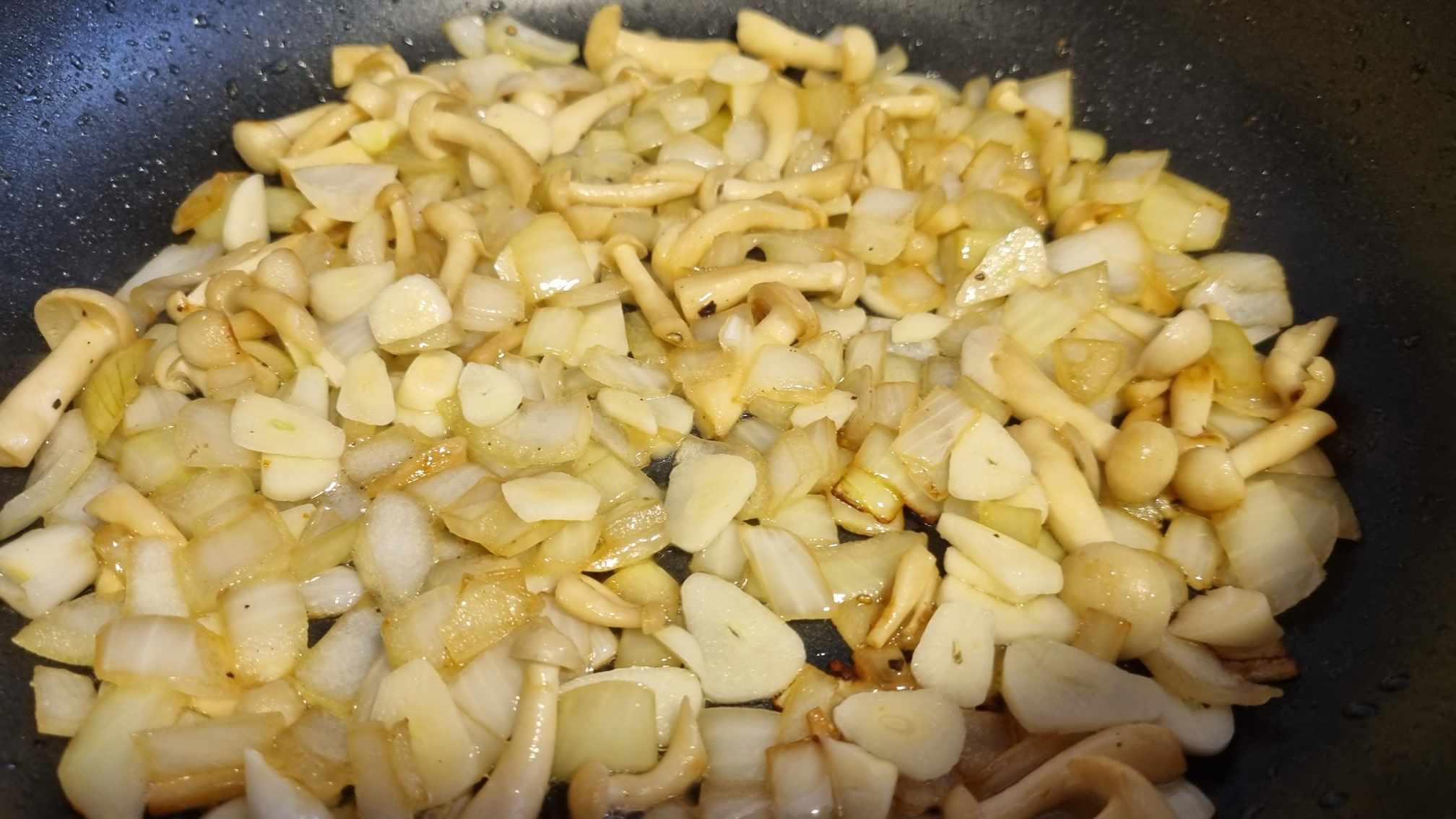
Sweat the onion and mushrooms on a medium heat, add the garlic and whatever other vegetables you want, and mix them together well stirring all the time. Don't season with too much salt yet.

Add the rice, let it fry for a minute, stir continuously, then start pouring in the chicken stock. Once bubbling, turn the heat down and add more stock every now and then to keep the contents from drying up and burning.


After 5 or 6 minutes, put the secreto back in and mix all the ingredients well. 

From the moment the stock goes in, you will need between 12 and 15 minutes until ready to eat.


Saturday, 4 November 2023

Recipe CXXXIX - Arroz Con Salchichas, Carne y Garbanzos


So I've rocked up in Spain. In August, we made the transition from Germany to Valencia and the chances of us returning north in the foreseeable future are pretty remote. What's more, I'd like to tell you about a theory of mine, based on this assumption: 

Spanish cuisine is head and shoulders above Italian. Why? Because it's been allowed to develop and adapt. And I think it's because of one very small but crucial difference - Italians name their food after either the place it was invented or the person who created it, and thus it is fixed in stone. Forever. There is no diversion from the recipe, or someone there will lose control and give your culo a good, hard schiaffeggio. 

In Spain, there are recipes named after places or people too, such as Paella Valenciana or Salmorejo Cordobés, but restaurant menus generally list items based on their ingredients, and for this sole reason, Spanish food has come on leaps and bounds in the twenty-first century, while Italian cuisine has painted itself into a corner, something the great Pellegrino Artusi would have definitely frowned upon.

Attempts at adapting recipes put most traditionalists (therefore most Italians) off - try adding some fresh sage in the ragù and watch them go nuts. Spanish restaurants not only offer a more diverse range of food, they are also much less pretentious. That isn't to say Italian food is bad; it's just a lot of it is underwhelming and rather outdated.

This recipe is one I adapted from a delightful dish I was served last week at the place round the corner from our office where we eat lunch three or four times a week. And this is the beauty of Spanish food - just choose the ingredients you want to add, which is why many of them below are optional.

Ingredients:

Four sliced longaniza sausages, or similar (thin pork sausages about 12cm long)

Two sliced black pudding sausages (optional)

350g diced veal

350g chick peas (optional - mine had some sliced truffles in)

3 diced carrots (optional)

Other diced vegetables, e.g. green peppers, peas, aubergine

1 large diced onion

2 to 4 cloves of garlic

350g traditional rice

1 litre meat broth

Olive oil for frying

A little salt and pepper

Some dried herbs (optional)

Some water (optional)


Instructions: 

Firstly, put your olive oil on medium heat and add your vegetables and garlic. 

Put a little salt and pepper in it and fry gently into a sofrito. Then add your sausages and meat and fry until they are sealed. 

Add your chick peas and the rice and start slowly pouring in your broth, letting it reduce before putting in some more. 

Keep this up for 15 to 20 minutes, then serve piping hot.

It should have a creamy and sticky texture.

¡Que aproveche!


Monday, 10 August 2015

Recipe CXXIV: Home-Made Spicy Tomato Soup

Cooking on a Sunday is one of life's pleasures, and this weekend was one of those. As our guests were bringing the dessert, I decided to make a starter. This one is one of the finest things you can do in a kitchen, and it really is so, so simple.

Ingredients:
2 kg fresh tomatoes
1 green chili pepper
1 red chili pepper - keep some of the seeds, depending on how spicy you want it
1 sweet red pepper
1 large onion
4-6 cloves of garlic 
All of the above chopped into pieces

Three-quarters of a bottle of red wine
A teaspoonful of a red spice (cayenne pepper or even tandoori masala)
5 teaspoonfuls of Worcestershire sauce
3 thick slices of white bread
A fresh basil plant from a reputable supermarket, leaves broken 
50 g butter
Salt to taste


Instructions:
Put a lot of butter in a large, heavy non-stick frying pan or saucepan. While it is melting, add the onions and a pinch of salt, and fry gently for a few minutes - you don't want the onions to burn and crisp up. Add the peppers and garlic. Let them slowly sweat until soft. Then add the red wine and Worcestershire sauce.
(To give it your own personal touch, you could always use a variation - just use your imagination - something like Tabasco sauce, or red wine vinegar, soy sauce or even balsamic vinegar, but make sure whatever you use, the flavours fit!)


Let the red wine and Worcestershire sauce reduce by about half until it turns into something less liquid and more gloopy.


You are now ready to add the tomatoes. Put a lid on top, turn the heat right down to a gentle simmer and let the tomatoes soften until they are easily crushed.


Once they are really soft, add the basil, bread and red spices. Let the contents of the pan mingle for 10 minutes or so, while the bread soaks up some of the liquid.


Pass the contents of the pan through a blender and pour into a serving bowl.


Serve with a nice bottle of red wine. We chose Louis Chèze Caroline Saint-Joseph 2011, a fantastic wine that really highlights the spiciness of the soup.


Enjoy!

Sunday, 24 November 2013

Recipe CXI - Veal Steak Strips with a Leek and Blue Cheese Sauce

That's not the full title, but on the Net one is supposed to be brief... The full recipe would be "Veal Steak Strips and Caramelised Onions on a Bed of Spiral Pasta in a Leek and Blue Cheese Sauce", but that would just look too unwieldy...

Anyhow, this recipe is perfect for a cold November evening when the nights are getting longer and the memories of summer are still not so far away. 

Ingredients:
A third of a leek, cut into tiny pieces
100g Roquefort, Stilton, Gorgonzola or some such blue cheese
1 or 2 onions, thinly sliced
200ml cream
400g pasta, preferably large
Some small veal steaks, sliced into strips
Ground black pepper
Lots of butter for frying


Instructions:
Put butter into a saucepan and a decent frying pan, and water into another saucepan. Switch all of them on medium except the water (high).
Put the steaks in the frying pan and add a tiny bit of salt. Fry gently, removing any leakages from the meat. Put the onions in towards the beginning.
Take the leek and pulse it in the mixer for a while until it is in small pieces. Fry gently in butter.
Put the pasta in salted boiling water.


With 5 to 10 minutes before the pasta is ready, put the blue cheese in with the leek. Allow it to melt, then add some cream and let it heat on a gentle temperature without bubbling.


Once the pasta is cooked, the rest should be ready too. 


When dishing up, think about making it presentable. I mixed the sauce with the pasta, put the meat on top in a small pile and the onions on top. But I'm sure you'll have a method that is just as attractive! Finish off with some rocket salad or such like to give it some colour.

I like my steaks nicely browned on the outside and red on the inside, hence the contrasting shades.

Friday, 15 November 2013

Recipe CX - Sauce Andalouse

I went to a café today here in Germany where there was a TV on in the corner. I don't have German TV at home so it was quite an experience to see what their cookery programmes looked like - I don't think I remember someone looking quite as orange or having such white teeth as the flirty presenter, who did a lot of pointing at the camera, which moved round the set making me queasy.

The camera settled on the presenter eating the food but there was not much camerawork directed at the food itself or its preparation. It was on silent, so I was saved from having my ears as well as my eyes violated by this daytime TV show for the colourblind. I think it was called Topfgeldjäger. What shocked me the most though was the food they were cooking. I couldn't believe the size of the portions and the monotone colour of the dishes they were proffering to the German public. One of the dishes was steak but it was a pallid grey colour, not a bit of red in it.

Considering the blandness of the dishes and the gaudy luridness of the studio, the presenter and the contestants, they could have filmed the whole thing in black and white, it would have saved the ZDF a lot of money in spraytan and studio décor. So that really got my back up and I wanted to rebel in my own little way in my kitchen.

I got the butcher to cut me off some mini steaks and I cut up and fried some chips, but I decided to make my own Andalouse sauce to go with it for a change, instead of mustard or mayonnaise.

Ingredients (makes 2 jars of it):
1 red pepper
1 green pepper 
1 onion
1 lemon (squeezed)
About half a pot of mayonnaise
Half a tube of tomato purée
A teaspoonful of chili powder (optional)
A pinch of salt


Instructions:
Put the onion, red pepper and green pepper into a mixer and blitz until it is virtually a paste. Add the lemon juice and the tomato purée and pulse a couple of times to integrate it. Then put in the mayonnaise and pulse gently until the whole mix is a bright pink colour. Add the chili powder and stir it in.


Put the whole thing in the fridge for a while (minimum an hour) for the flavours to run. Just before your chips and steak are done, heat the sauce up gently and serve either on the plate or in a small bowl for decoration.

Thursday, 5 September 2013

Recipe CVII - Veal Cutlets in Tomato-Pepper Sauce

There comes a time when even such a humble customer as myself can force (or embarrass) a supermarket to expand its sorry variety of wares at the meat counter. And so it came to pass, that in the last month or so, my local supermarket has cut down on painting all their best meats some orange-red hue of tasteless marinade, and tried very hard to make pork just one of the meats on offer, not the main meat on offer. And to my surprise, they had veal cutlets there yesterday. As soon as the woman offered them to me, I didn't even bother looking at the rest. This is a flexible recipe, and you should add ingredients as you see fit, but here is the skeleton.

Ingredients:
Some veal cutlets
*Some tomatoes
*A red pepper but if you like bitterness, a green one
*a few slices of leek
*3 to 5 cloves of garlic
*A glass or two of red wine
*A tablespoon of vinegar
*Salt and freshly ground black pepper
*Some fresh herbs (I used 7 leaves of sage)
An onion, roughly chopped
A courgette, cut into thick pieces
Some pasta or boiled potatoes.

Tools:
An electric blender


Instructions:
Put all the ingredients above highlighted with an asterisk (*) into a blender and give it a good go until the pieces are very thin and there is a drop of liquid from it. 


Put the veal in a high-sided pan with some hot butter or olive oil, and seal it. Remove from the pan and put in the onion and courgette. Sweat them nicely, put the veal back in the pan, and pour the mixture over the meat.


Cover it and cook it on a low heat for as long as you like. I gave it 2 hours, to let the flavours really run.
Due to the choice of my guests, I used penne for it, but tagliatelle or potatoes would be a lot better.


I really apologise for the terrible photo above, but I had to improvise because the photos of the original presentation somehow deleted themselves!!

Tuesday, 27 August 2013

Recipe CVI - Pork Belly Stew with Honey and Beans

How do you know when a recipe is fully rounded or not? When you have adapted it three or four times to reach the right flavour and ingredients. This recipe will take some time before it reaches its roundedness, but here is a good base from which to adapt. It is extraordinarily simple to make and your house will smell utterly delicious for hours.

Ingredients (for four people):
A medium-sized ceramic or cast iron casserole dish with a lid
Some butter for frying
500g sliced pork belly, cut into strips or left whole - your choice
4 potatoes
4 large cloves of garlic
1 onion
A cup of broad beans (but chick peas, lentils or something similar will also do)
A cup of yellow peas*
A bouquet garni (fresh herbs - sage, rosemary, thyme, etc...)
Some coarsely ground black pepper
2 tablespoons of honey
Salt and water

*fresh yellow peas are rock hard and you should either leave them to soak in water overnight before you use them, or you should cook them for at the very least 2 hours. I chose the latter, as it fit the recipe.


Instructions:
Switch the oven on to about 170°C. Put 2 of the garlic cloves in some butter and allow it to brown. Then remove the garlic from the oil. This will give your casserole a hint of garlic without overpowering it.


Then add the pork with a dusting of salt. Brown it until sealed, then add the black pepper, onion, the rest of the garlic and bouquet garni.


Give it a stir, allow the onion to sweat a little, then put in the yellow peas, broad beans, potatoes and honey. Give it a very good mixing so the yellow peas sink to the bottom. Add water until almost to the level of the ingredients, a good shake of the salt pot and bring it to the boil.

You can then put it into the oven. Give it a minimum of 2 hours, keep trying the yellow peas as they will be the last to be ready. Everything else will be so succulent and moist, and should have a prevailing taste of honey without being overbearing.

Take it out of the oven every 30-45 minutes to fill up with water and to add a sprinkle of salt.

Friday, 16 August 2013

Recipe CV - Chicken Breast in Creamy Bacon and Mushroom Sauce

Sorry for the recent lack of posts - I've had quite a lot to do recently renovating the house, painting and whatnot, and then there's the little matter of work. But now I have a dry run through to October, so I hope to pick up a little more momentum...

This recipe is so easy and a real crowd pleaser, going really well alongside the rocket salad recipe of last time. I bought a metallic frying pan last year specifically for meats. One of those that gets rustier the longer you use them. They cook meat really well and I couldn't ever imagine not using one for this type of dinner. 

Ingredients:
2 to 4 chicken breasts
Some thinly diced bacon
An onion
Some sliced mushrooms
Some cream
Some black peppercorns
Some Italian pasta or Greek krithiraki, potatoes or rice
*no salt!!!


Instructions:
Slice the chicken breast exactly as you like it. I prefer large pieces for this, but there is something to be said for fork-sized pieces. Fry the chicken breast in a little olive oil. Keep turning and pressing all the time. Season the chicken with some of the pepper. Add the bacon and onions for about five minutes before transferring them to their own pan.


Add the mushrooms and a little more pepper. After some time you will need to add the cream. Do you want to reduce the sauce? Put it in early. Do you want to have a lot of cream? Put it in 5-10 minutes before serving.


In the meantime, boil the pasta, and keep turning the chicken!!
To present, this is the perfect recipe to think about ways of making the dish attractive and appetising. I like to serve the sauce in a round mini-bowl on the plate, so people can make up their minds where to pour it. Some like it on their meat, some on their side dishes, me all over...


The sauce is salty enough, so don't worry about that. It is just the base - do some experimenting: you could also add ground or whole green peppercorns, white wine or so many other things to it.

Monday, 10 June 2013

Recipe CI - Pesto from Garden Herbs

We had a party at the weekend, and my herb garden came in pretty useful for marinades. This one is so easy to make and also so very tasty. It goes incredibly well with chicken or pasta.

Ingredients:
Rosemary
Oregano
Sage
Any other herbs you wish
1 small onion
4 cloves of garlic
Some hard cheese like Manchego, Cheddar or Pecorino
Some freshly ground black pepper
Some salt
A good amount of olive oil


Instructions:
Put everything in a blender and give them a good spin for at least two minutes.


Done!

Sunday, 21 April 2013

Recipe XCVI - Celeriac Purée

Last week I had what I can only believe must have been the world's greatest chicken, a superhero amongst all the other farmyard fowl, a titan of the coop, a caped crusader of a bird which provided us not only with an unbelievable amount of the best chicken meat I have ever tasted, but gave me the best stock in living memory, and I wanted to do something with that stock to give it the perfect send-off. Anything less would have been an insult to this magnificent specimen of a bird, so I decided to make one of those dull dishes with one of those vegetables which is almost laughed at due to its likeness to the Ood from Doctor Who, the type of vegetable that makes people pleasantly surprised when they realise it's actually pretty damn tasty when served properly...


Ingredients:1 celeriac, peeled and chopped into 2cm cubes
2 onions
1 litre of chicken stock
1 tablespoon of cumin
Half a tablespoon of turmeric
Ground white pepper
40g butter
A carton of cream (optional; preferably thick)


Instructions:
Put some butter into a high-sided frying pan, put on a low-to-medium heat and when hot add the spices. Throw the onion and celeriac into it and stir until all the ingredients are nicely covered. 


Continue stirring for 2 to 3 minutes, then pour the stock on top. Bring to the boil, then turn down the heat to simmering temperature for about 20 minutes.


Keep the liquid, but put all the solid ingredients into a blender and allow the mixture to turn into a saucy consistency. Put the cream in at this point, but adding some of the liquid from the stock is a good idea too.


Keep it warm until all your other food is prepared; when serving, you can put a large spoonful on the plate and with the underside of the spoon run it through the purée to create a decorative look.


It is best served with something like boiled potatoes so that it can act as a kind of dip. With the rest of the leftover stock, I let it boil down in a pot of Savoy cabbage until the fat from the stock fried it gently.

Sunday, 2 December 2012

Recipe LXXXII - Homemade Burgers and Potato Wedges


One thing I really appreciate in the UK is proper unassuming pub food. Burger, potato wedges and mayo please my taste buds far more than anything from a fancy restaurant. And that's not only because of the food, but because of the atmosphere of the place. The people there are far more accessible, the service is (usually) with a smile and the food is filling. Plus you don't get stared at if you eat your short pasta with a spoon. This recipe is so simple and takes twenty minutes to prepare and half an hour to cook.

Ingredients (for 2 people)
500g minced beef
1/2 an onion (finely chopped)
A spoonful of thyme
A spoonful of oregano
5 cloves of garlic (chopped - optional)
10 peppercorns (crushed)
Some salt
1 egg
A tablespoon of flour
10 smallish potatoes, cut into wedges

Instructions:
Put your beef in a mixing bowl. Add the salt, onion, herbs and peppercorns, and give it a really good mix. Then add the egg, which acts as a binding agent.


Once everything is mixed in well, divide them into two balls and put them on a lightly-floured plate and put some flour on top. Flatten them with a spatula or the ball of your hand to the thickness you require. I like mine thick, so I cook mine for longer, but it's up to you.


Put it in a buttered, non-stick pan and fry until done. I like mine slightly burnt on the outside, so for the last ten minutes I turn up the heat.


For the potato wedges, I'm sure you know how to do them, but anyway - heat up some oil in a deep pan. While it is getting nice and hot, cut the potatoes into fairly large pieces. Wash and dry them. The easiest way to dry them is to put them on a towel and dab them. Pick them up to put them into the frying basket, then deep-fry them for five minutes. This is the 5-4-3-2-1 method. Remove the basket for a while and put it back in for four minutes. Remove again, then three, repeat, two, and just before serving, one minute. They will be lovely and crispy by then!


I served it with a mix of fennel and onion, plus a good spoonful of mayonnaise.


Sunday, 18 November 2012

Recipe LXXX - Czech-style Braised Red Cabbage with Roast Pork, Brussels Sprouts and Carrots

On 28th December, I will be returning to my true home, the place I feel most like me, the place that loves me like a favourite aunt, Prague. I will only be there for six days, but the knowledge I will return to Base Camp is what keeps me going every day through the dark hours. The Czech Republic is one of Europe's best-kept secrets when it comes to food. I decided to recreate one of the dishes that will fill my stomach when I arrive.

Ingredients for the cabbage:
1 red cabbage
1 piece of fennel, sliced, but not too small
10 peppercorns
2 apples, chopped
1 onion, cut into rings
1 glass cherry schnapps
1 litre beef stock, warmed up
1 knob of butter
(Sultanas are also good with this dish! You are also welcome to add other things that would suit it: red onions or shallots, parsnip, pumpkin,  whatever...)


Instructions:
Take a large saucepan and melt some butter in the bottom on a medium-low heat. Add the fennel, a little salt and stir until it sweats. Then the onions and peppercorns. Finally, add the apples 2 minutes before you put in the red cabbage. Stir continuously.


Add the cabbage and continue stirring for a good 5 minutes. This allows the vegetables to get softer without burning.


Put in a good 20cl of fruit schnapps. I used cherry, as it's also a red fruit. Allow it to bubble in the bottom, then continue stirring.


Add the beef stock and put on the lid. Turn the heat right down and allow everything to run for as long as two hours, always checking the liquid level. With the right saucepan, nothing should escape, and you should end up with a truly delicious jus.


I served it with roast pork belly with crackling, roast carrots and Brussels sprouts.


To get a hard roast pork skin:
All you need to do is put the oven on at a low 150°C, cut your pork skin at each end a couple of gashes (this hardens it more easily), not forgetting to rub salt over it, baste your pork in the oil, put the pork in the baking tray with the skin facing upwards, leave some butter on top of it and allow it to melt in the oven. After 45 minutes, you can add the sliced carrots and baste the pork a little more. After an hour, turn the heat up to 200°C. For extra crackliness to the skin, spread some honey or caramel on it 10 minutes before removing it from the oven.

To get a tasty Brussels sprout:
After boiling in salt water, pour out the water and put a knob of butter in the pan. Once sizzling, add the sprouts, stirring constantly. Put in some ground black pepper and grate some nutmeg over it.